

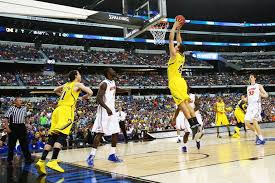
 Maybe its time to shed the hypocrisy about major college sports. Since the Northwestern Court decision there has been a lot of publicity surrounding all of the money involved, particularly about football and men’s basketball. Much ado about multi-million-dollar coach’s salaries and how many times that is more than the university’s president. Lets look at an example of the excesses. In pro sports they call it license fees – an amount a fan has to pay to be allowed to buy their tickets. In major college sports – here again principally football and men’s basketball – they are more civilized and the fees are called minimum contributions to the athletic scholarship fund. Maybe it is not more civilized just called something different. But the end result is the same; if you want those tickets pony up the Benjamin’s.
So who is responsible for these excesses? Is it the coaches, the college administration? Of course they have something to do with it and agreed that major college revenue sports are a business. Further, they like any other business have to satisfy their customers. So if you want to know who is in large part responsible find the nearest mirror and ask the person you see. Yeah it’s us! Even if we do not pay the ticket price or make the minimum contribution to the athletic scholarship fund we watch the games on TV. And those advertisers would not pay the substantial amounts for advertising spots if they were not receiving a return – which they see when we purchase their product or service. Any idea how much a 30 second spot on tonights college men’s basketball championship costs? Try $1.26 million. Only a 30 second spot during the Super Bowl costs more than a 30 second spot during the men’s NCAA basketball championship.
The issue as to whether or not college athletes should be allowed to organize and be represented is a corollary to the old argument that says these athletes should be paid given the huge revenues that are generated by the games they play. Further, in many instances the only reason the young men are in college is to play and hopefully find a professional sports career and not to obtain a degree. What makes this whole thing a little amusing is that Northwestern graduates 97% of their football players vs. less than 50% at many other schools. Kind of interesting that the current uproar started at Northwestern.
Maybe it is the curmudgeon in me coming out again but lets quit lamenting the state of major college sports. If you really object to what is happening don’t buy tickets or support them by watching the games on TV. Otherwise, just sit back and enjoy.
 Loren Berg's Blog
I think your “solution” is naive. I suspect most sports fans are at best ambivalent about paying college athletes and at worst hostile to the idea. Expecting sports fans to somehow boycot this important pasttime is bound to end in disappointment. It’s a lot like expecting whites to stop discriminating agains blacks. The victim must organize and resist the system that is victimizing them. College athletes are the victims. The major sport players are not really students in any real sense. They take phony classes and most probably couldn’t qualify to enter college as regular students. They are exploited and should organize so they can be fairly compensated. Add to this the fact that major college coaches are paid an obscene salary and receive other benefits from deals on shoes, clothes etc. and it is easy to see where resistance to change will come from. I’m sure NCAA executives are similarly compensated and will resist any attack on their monopoly power.
It has been said that organizing college athletes will ruin college sports. News flash: they were ruined years ago when major sport athletes were given special treatment and admitted without proper academic qualifications. They were ruined when they became big money makers via TV. They were ruined when college presidents were more worried about attracting major donors then running quality academic institutions.