
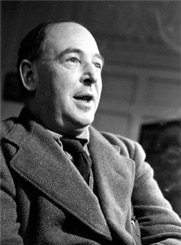
Clive Staples Lewis (1898–1963) was one of the intellectual giants of the twentieth century and arguably one of the most influential writers of his day. He was a Fellow and Tutor in English Literature at Oxford University until 1954, when he was unanimously elected to the Chair of Medieval and Renaissance Literature at Cambridge University, a position he held until his retirement.
Lewis wrote more than thirty books, allowing him to reach a vast audience, and his works continue to attract thousands of new readers every year. C. S. Lewis’s most distinguished and popular accomplishments include Mere Christianity, Out of the Silent Planet, The Great Divorce, The Screwtape Letters, and the universally acknowledged classics in The Chronicles of Narnia. To date, the Narnia books have sold over 100 million copies and been transformed into three major motion pictures.
Friendship is the greatest of worldly goods. Certainly to me it is the chief happiness of life. If I had to give a piece of advice to a young man about a place to live, I think I should say, “sacrifice almost everything to live where you can be near your friends.”
You can’t get a cup of tea large enough or a book long enough to suit me.
For me, reason is the natural organ of truth; but imagination is the organ of meaning. Imagination, producing new metaphors or revivifying old, is not the cause of truth, but its condition.
Everyone thinks forgiveness is a lovely idea, until they have something to forgive.
The books or the music in which we thought the beauty was located will betray us if we trust to them; it was not in them, it only came through them … For they are not the thing itself; they are only the scent of a flower we have not found, the echo of a tune we have not heard, news from a country we have never visited.
We have trained [people] to think of the Future as a promised land which favoured heroes attain — not as something which everyone reaches at the rate of sixty minutes an hour, whatever he does, whoever he is.
I do not think the forest would be so bright, nor the water so warm, nor love so sweet, if there were no danger in the lakes.
We all want progress. But … if you are on the wrong road, progress means doing an about-turn and walking back to the right road; and in that case, the man who turns back soonest is the most progressive man.
No one ever told me that grief felt so like fear.
In reading great literature I become a thousand men and yet remain myself. Like a night sky in the Greek poem, I see with a myriad eyes, but it is still I who see.
When I was ten I read fairy tales in secret and would have been ashamed if I had been found doing so. Now that I am fifty I read them openly. When I became a man I put away childish things, including the fear of childishness and the desire to be very grown up.
You never know how much you really believe anything until its truth or falsehood becomes a matter of life and death to you.
The value of the myth is that it takes all the things we know and restores to them the rich significance which has been hidden by the “veil of familiarity.”
A children’s story which is enjoyed only by children is a bad children’s story. The good ones last. A waltz which you can like only when you are waltzing is a bad waltz.
The task of the modern educator is not to cut down jungles but to irrigate deserts.
The typical expression of opening Friendship would be something like, “What? You too? I thought I was the only one.”
I wrote the books I should have liked to read if only I could have got them. That’s always been my reason for writing. People won’t write the books I want, so I have to do it for myself.
Some day you will be old enough to start reading fairy tales again.
 Loren Berg's Blog