

Over the years, the typical menu aboard a Pan Am flight was a reflection of luxury and international flair.
Wealthy Americans’ mid-century interest in luxury and gourmet dining (a selling point was that the famous Parisian restaurant, Maxim’s, allegedly supervised the preparation of meals) was on full display in the multi course menus that greeted first class passengers, down to the Maxim’s logo that decorated the printed menus.
Smartly outfitted chefs and stewards carved meats aisle-side under the gaze of sophisticated passengers, but to keep consistent standards, much of the preparation needed to be centralized.
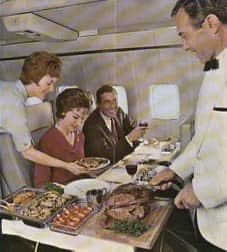
Pan Am’s solution was to develop four gigantic commissaries–in New York, San Francisco, and Tokyo, which would prepare foods, flash Y freeze them, and deliver them to airports around the world. What this meant practically was that items sourced in France, such as foie gras, might be shipped to New York for including in first-class meals, then shipped back to Paris to be loaded on a plane destined New York.
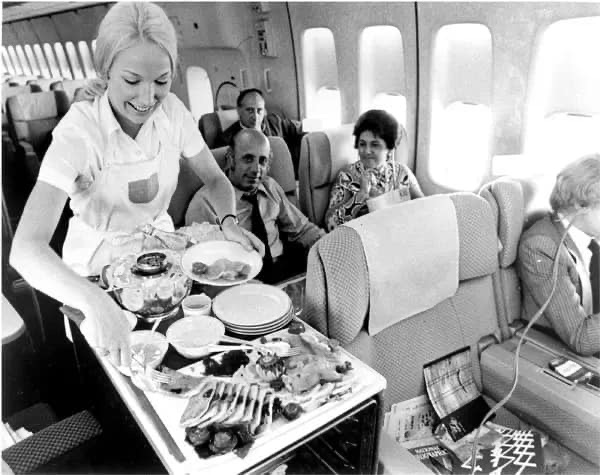
The logistics (and food miles, in these pre-environmentally-conscious days) were astounding.
In the 1950s and 1960s, passengers could expect elaborate meals with multiple courses, such as caviar, lobster, and chateaubriand, served on fine china with silver cutlery.
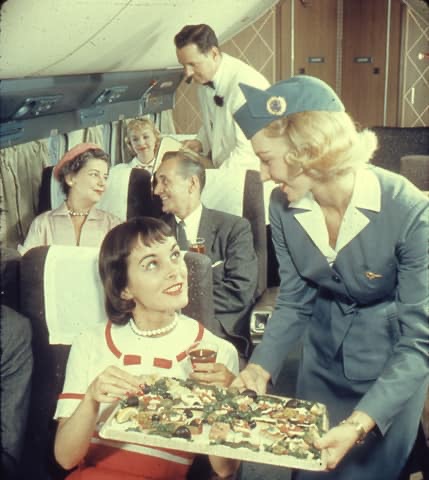
By the 1970s, the menus had become more diverse, incorporating dishes from around the world to cater to an increasingly international clientele.
Despite the changes and deregulation in air travel, Pan Am maintained a reputation for its gourmet cuisine until its operations ceased in 1991.
 Loren Berg's Blog
my how it’s changed over time