
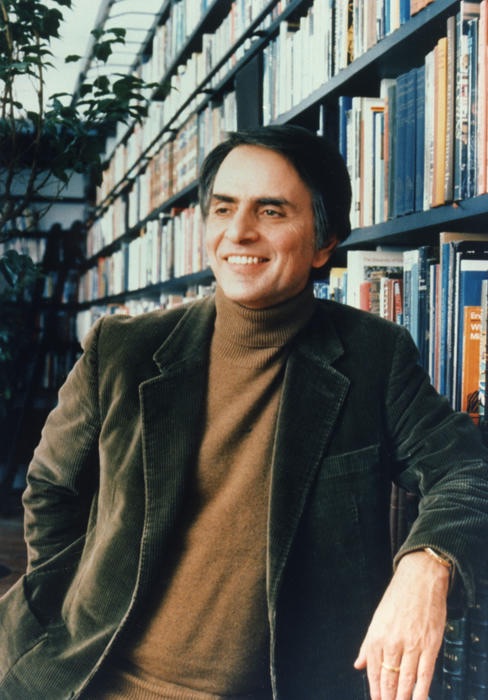
“Religion deals with history, with poetry, with great literature, with ethics, with morals, including the morality of treating compassionately the least fortunate among us. All of these are things that I endorse wholeheartedly. Where religion gets into trouble is in those cases that it pretends to know something about science.
The science in the Bible, for example, was acquired by the Jews from the Babylonians during the Babylonian captivity of 600 BC. That was the best science on the planet then. But we’ve learned something since then. Roman Catholicism, Reform Judaism, most of the mainstream Protestant denominations have no difficulty with the idea that humans have evolved from other creatures, that the Earth is 4.6 billion years old, the Big Bang. They don’t have any trouble with that. The trouble comes with people who are Biblical literalists who believe that the Bible is dictated by the Creator of the Universe to an unerring stenographer and has no metaphor or allegory in it.”
Carl Sagan “The Science in the Bible” (Charlie Rose Interview)
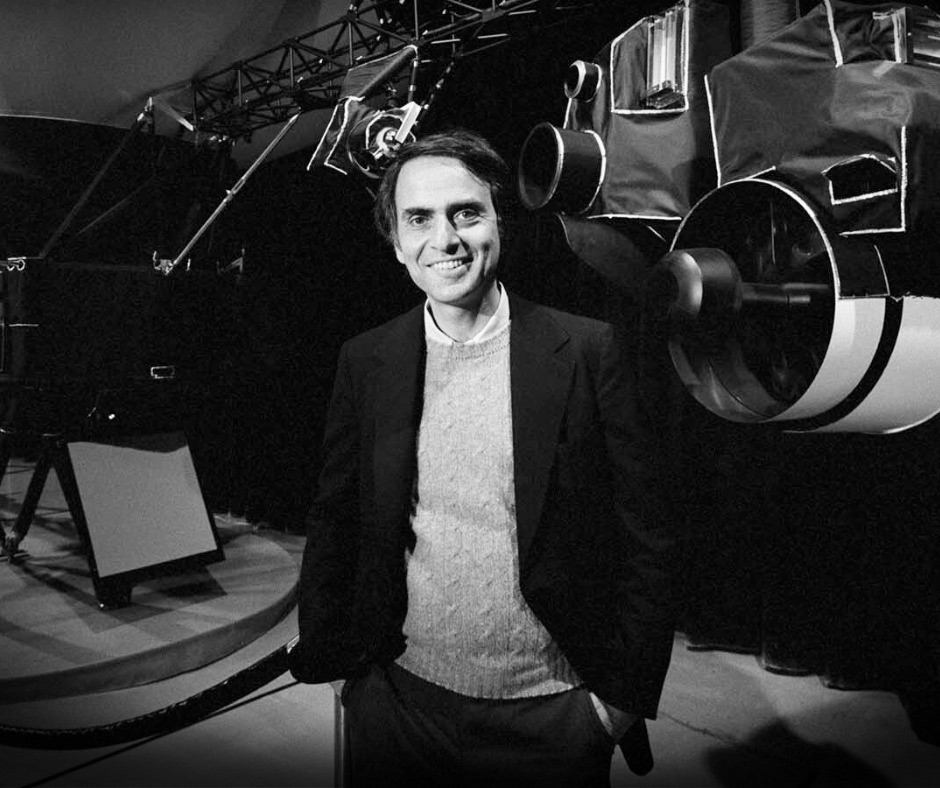
Some people, at least, are disturbed about the idea that there might be life elsewhere; even simple forms of life. And the idea that there might be civilizations more advanced than ourselves elsewhere upsets a lot of people. I’m not a psychologist but I have spoken to a lot of people on the subject, and I think that there is a sense of “let’s keep the idea of where we are in the universe tidy.” It gets very complicated if you imagine that we’re only one kind of life where there are millions of other kinds, some of them much more advanced than us. That is precisely a mind expanding experience, and some people are not interested in having their minds expanded.
I think it also bumps into people’s religious prejudices. The sophisticated representatives of all the major religions have stated that there’s no test of faith involved, that it expands the range of God’s activities if he made life on other planets and all that. But still I think there is a kind of fundamentalist malaise about the idea of life elsewhere.”
Carl Sagan (Rolling Stone Interview 1973)
Carl Sagan ; Broca’s Brain : Reflections on the Romance of Science
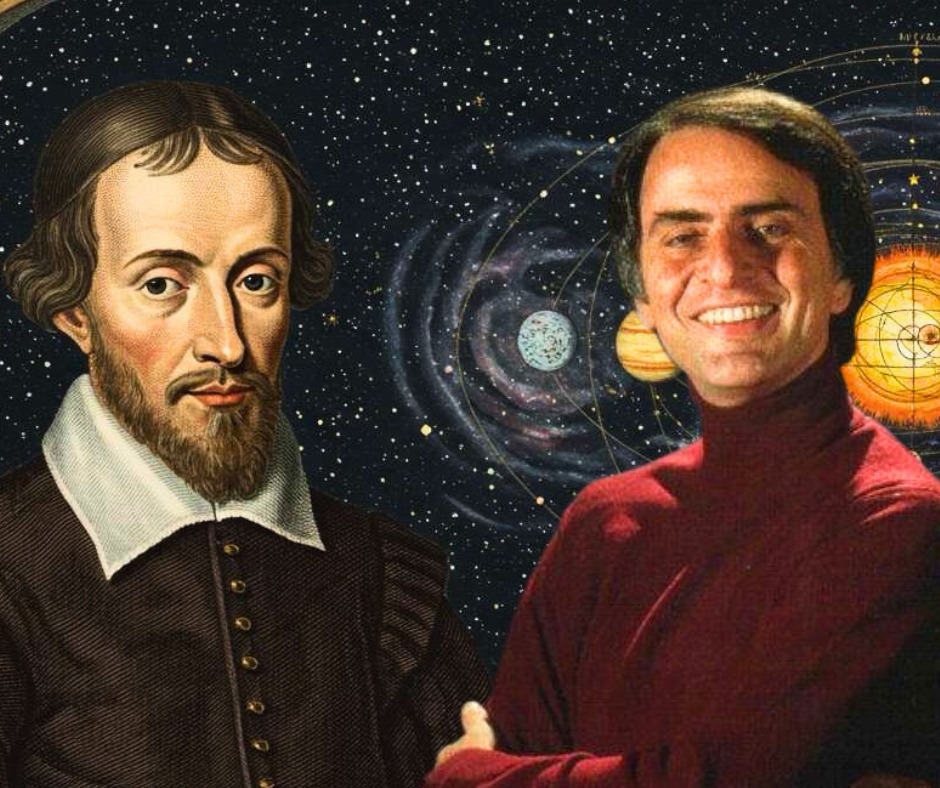
When he found that his long cherished beliefs did not agree with the most precise observations, he accepted the uncomfortable facts, he preferred the hard truth to his dearest illusions. That is the heart of science.”
Carl Sagan ; Cosmos “The Heart of Science”
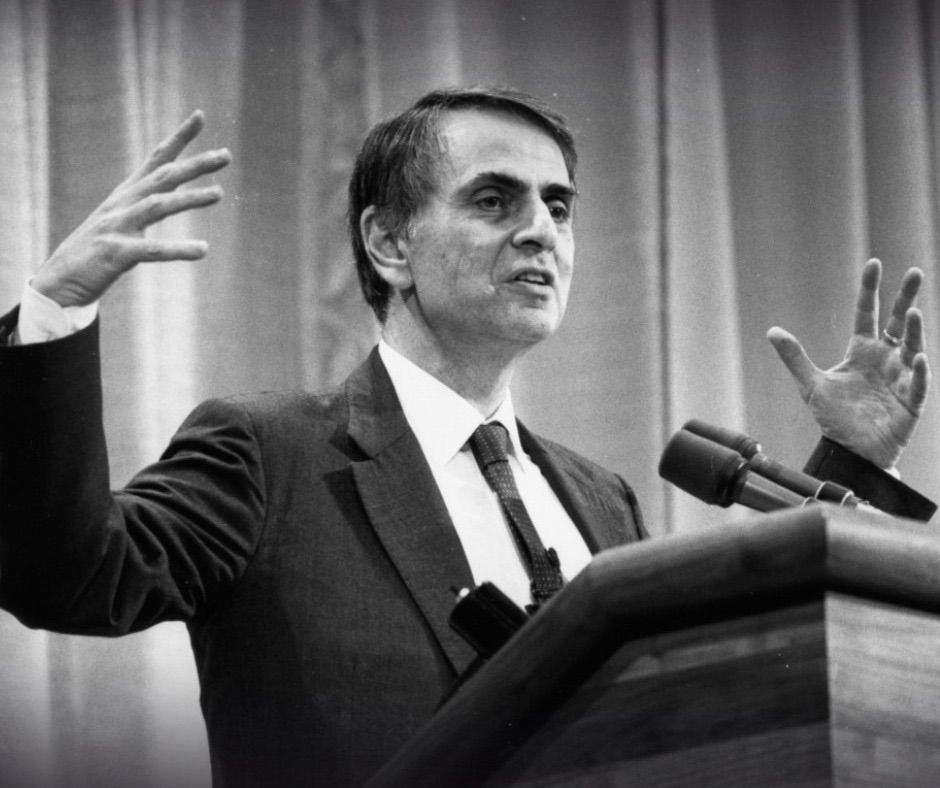
Then science came along and taught us that we are not the measure of all things, that there are wonders unimagined, that the Universe is not obliged to conform to what we consider comfortable or plausible. We have learned something about the idiosyncratic nature of our common sense. Science has carried human self -consciousness to a higher level.”
Carl Sagan ; Pale Blue Dot ; A Vision of the Human Future in Space
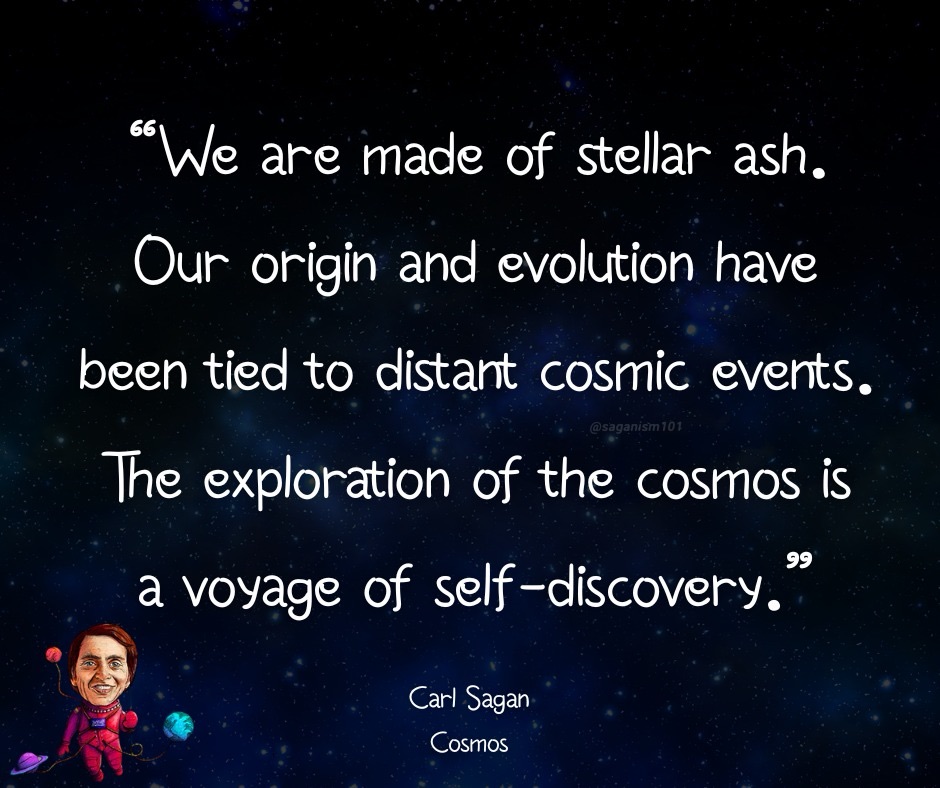
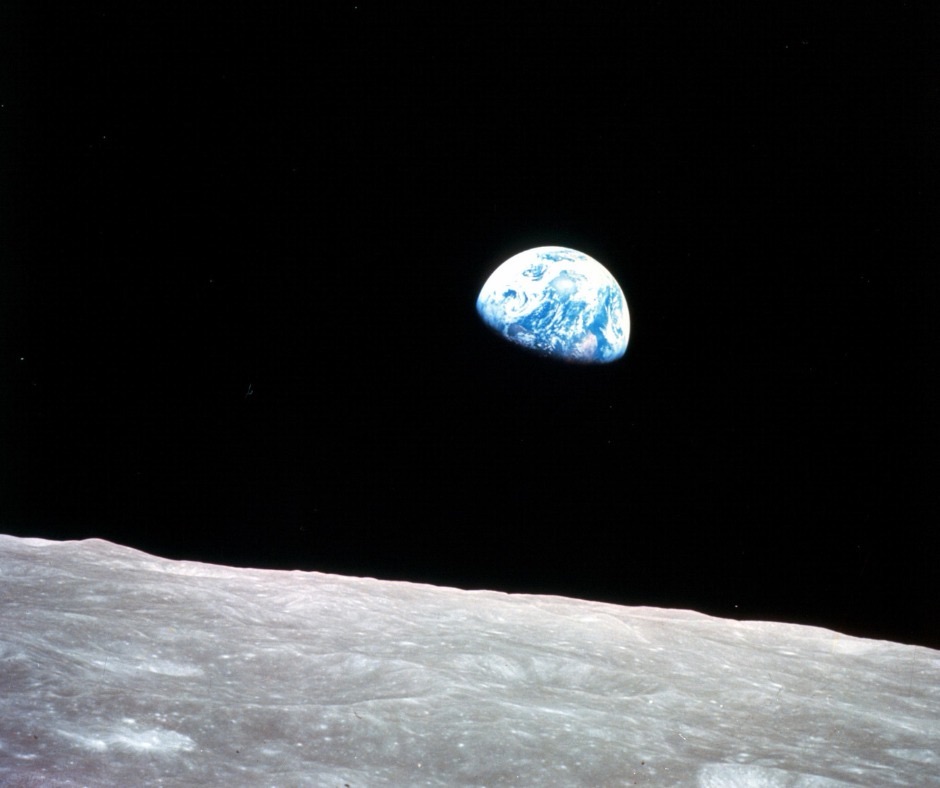
Carl Sagan ; Cosmos
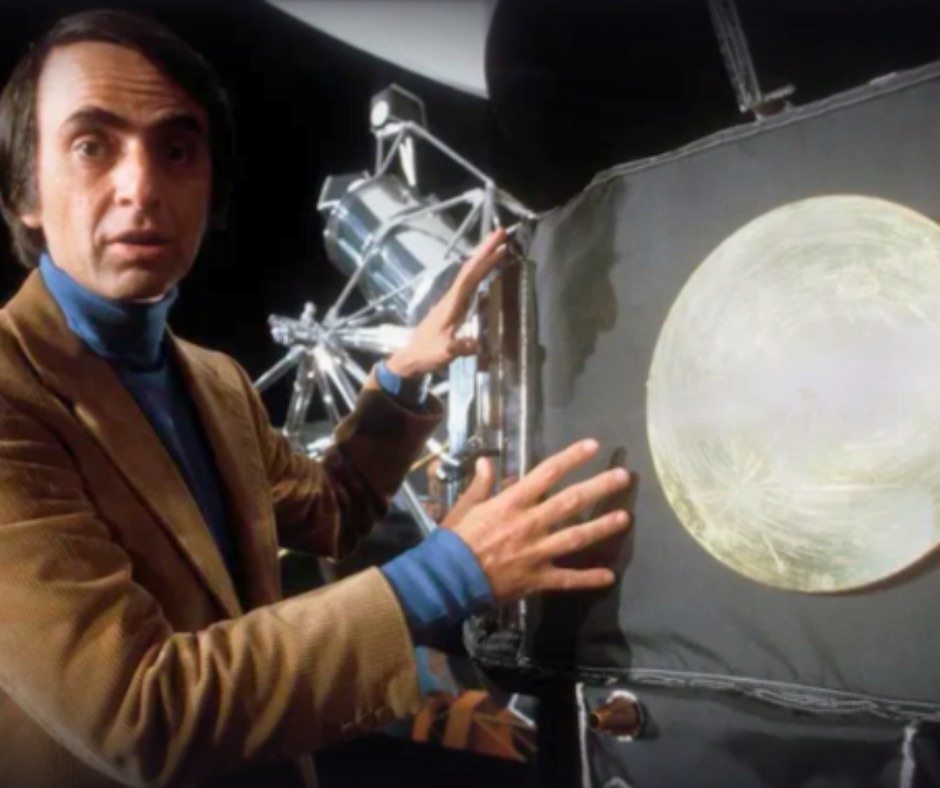
In the United States, for example, there are people who are called “creationists,” the more radical of whom insist that the Earth is less than ten thousand years old. The shorter the age of the Earth, the greater the relative role of humans in the history of the Earth is. If the Earth is, as we certainly know it to be, 4,500 million years old and the human species at most a few million years old, probably less than that, then we have been here for only an instant of geological time, for less than one one-thousandth of the history of the Earth, and therefore in time, as in space, we have been demoted from the central to an incidental aspect.
And then evolution itself was still a further disquieting discovery, because at least it had been hoped that humans were separate from the rest of the natural world, that we had been specifically put here in a way different from petunias, let’s say. And yet Darwin’s historic work showed that we were very likely related in an evolutionary sense with all the other beasts and vegetables on the planet. And there remain many people who are enormously offended by this idea.”
Carl Sagan ; The Varieties of Scientific Experience
“If I thought the supreme coordinator of the universe had a special interest in making me and my brothers and sisters, that would give me a special significance. It would make me feel good, and also make me think that maybe I didn’t have to take care of myself; someone much more powerful would do so. It’s a tempting idea, but we have to be very careful not to impose our hopes and desires on the cosmos, but instead, in the scientific tradition and with the most open mind possible, see what the cosmos is saying to us.”
Carl Sagan “The Cosmos” (Rolling Stone Interview 1980)
-Carl Sagan, Billions and Billions: Thoughts on Life and Death at the Brink of the Millennium (1997)
-Carl Sagan, Billions and Billions: Thoughts on Life and Death at the Brink of the Millenium (1997)
Carl Sagan on artificial intelligence (1975)
“When we characterize ants and geese as only robots, we are also in danger of losing sight of the possibilities in robotics and artificial intelligence over the next few decades.
Already there are robots that read sheet music and play it on a keyboard; robots that translate between very different languages; robots that learn from their own experiences, codifying rules never taught to them by their programmers.
Some chess-playing robots can defeat all but a handful of human chess masters. Their moves surprise their programmers. Their games are routinely analyzed by experts, who speculate about what the robot’s ‘strategy,’ ‘goals,’ and ‘intentions’ must have been.”
– Carl Sagan, In Praise of Robots
-Carl Sagan, Billions and Billions: Thoughts on Life and Death at the Brink of the Millennium (1997)
 Loren Berg's Blog