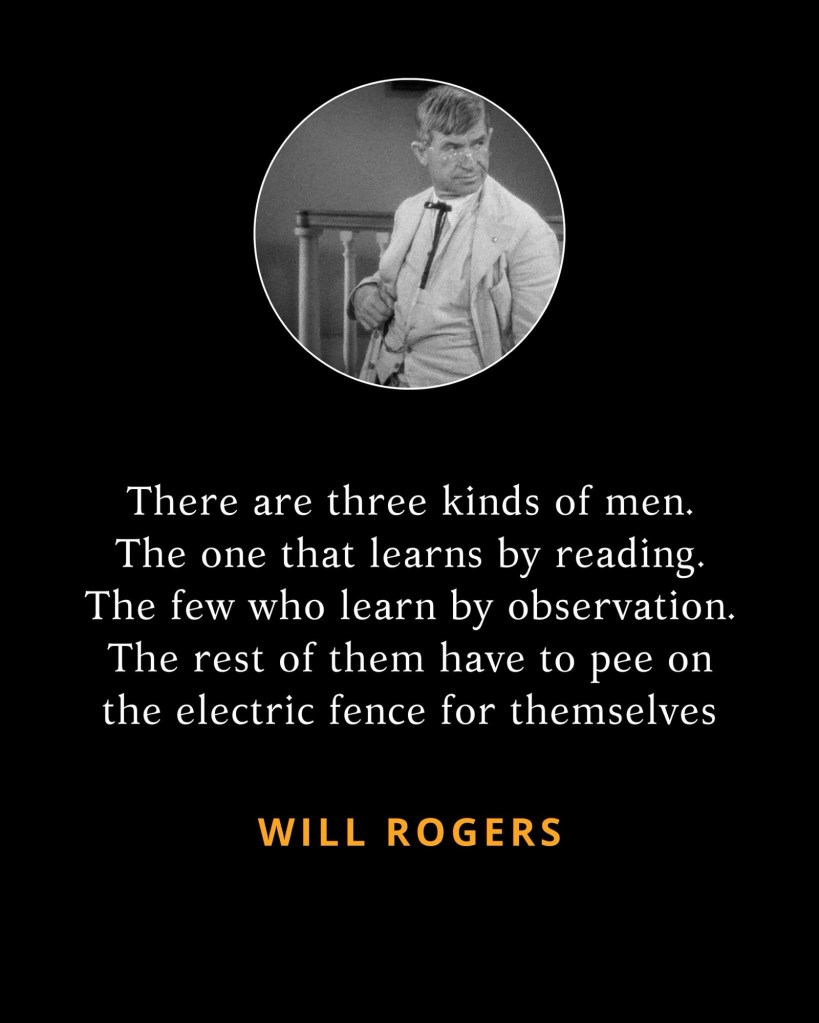
Rogers humorously highlights human learning styles. Some gain wisdom from books, some from experience, but many insist on painful mistakes. His wit reminds us that pride and stubbornness often delay growth, while humility in learning spares unnecessary suffering and hardship.
Here are 18 quotes from C.S. Lewis’ letters, essays, and literary works, covering a range of subjects from reading and writing to the importance of friendship. A little more on C.S. Lewis is at the end of this post.
Some day you will be old enough to start reading fairy tales again.
I wrote the books I should have liked to read if only I could have got them. That’s always been my reason for writing. People won’t write the books I want, so I have to do it for myself.
The typical expression of opening Friendship would be something like, “What? You too? I thought I was the only one.”
The task of the modern educator is not to cut down jungles but to irrigate deserts.
A children’s story which is enjoyed only by children is a bad children’s story. The good ones last. A waltz which you can like only when you are waltzing is a bad waltz.
The value of the myth is that it takes all the things we know and restores to them the rich significance which has been hidden by the “veil of familiarity.”
You never know how much you really believe anything until its truth or falsehood becomes a matter of life and death to you.
When I was ten I read fairy tales in secret and would have been ashamed if I had been found doing so. Now that I am fifty I read them openly. When I became a man I put away childish things, including the fear of childishness and the desire to be very grown up.
In reading great literature I become a thousand men and yet remain myself. Like a night sky in the Greek poem, I see with a myriad eyes, but it is still I who see.
No one ever told me that grief felt so like fear.
We all want progress. But … if you are on the wrong road, progress means doing an about-turn and walking back to the right road; and in that case, the man who turns back soonest is the most progressive man.
I do not think the forest would be so bright, nor the water so warm, nor love so sweet, if there were no danger in the lakes.
We have trained [people] to think of the Future as a promised land which favoured heroes attain — not as something which everyone reaches at the rate of sixty minutes an hour, whatever he does, whoever he is.
The books or the music in which we thought the beauty was located will betray us if we trust to them; it was not in them, it only came through them … For they are not the thing itself; they are only the scent of a flower we have not found, the echo of a tune we have not heard, news from a country we have never visited.
Everyone thinks forgiveness is a lovely idea, until they have something to forgive.
For me, reason is the natural organ of truth; but imagination is the organ of meaning. Imagination, producing new metaphors or revivifying old, is not the cause of truth, but its condition.
You can’t get a cup of tea large enough or a book long enough to suit me.
Friendship is the greatest of worldly goods. Certainly to me it is the chief happiness of life. If I had to give a piece of advice to a young man about a place to live, I think I should say, “sacrifice almost everything to live where you can be near your friends.”
Clive Staples Lewis was born in Belfast, Ireland, in 1898 to a family of avid readers. Lewis, too, was soon immersed in literature: He started reading at just 3 years old, and by age 5, he had begun writing stories about a fantasy land populated by “dressed animals.”
Years later, a 19-year-old Lewis served in World War I with the Somerset Light Infantry. He experienced trench warfare on the front line in the Somme, the horrors of which he carried with him for the rest of his life.
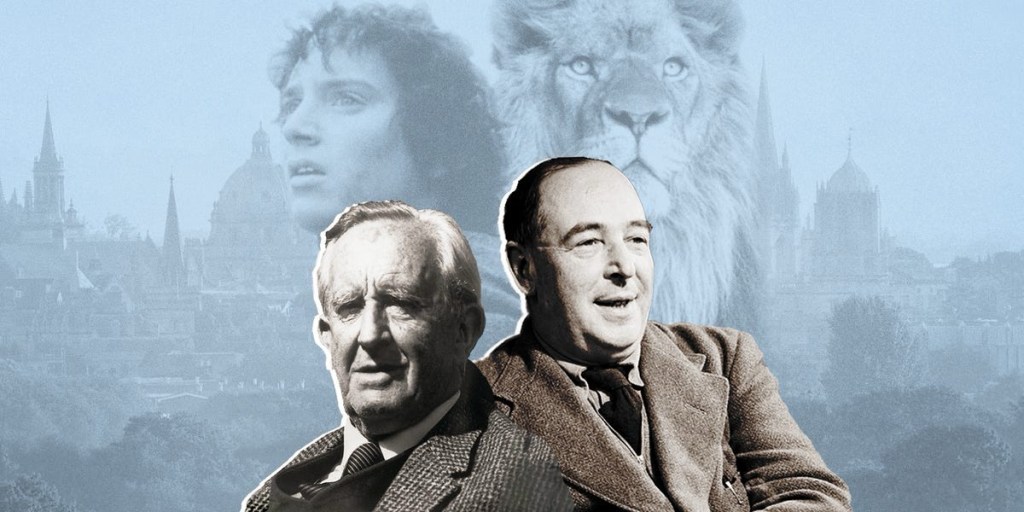
Lewis first met J.R.R. Tolkien in 1926, and the two men developed a lifelong friendship. Lewis, who had become an atheist early in life, found his way back to theism and Christianity under Tolkien’s guidance. Tolkien, meanwhile, openly credited Lewis as a major source of creative encouragement: “Only from him,” wrote Tolkien, “did I ever get the idea that my ‘stuff’ could be more than a private hobby. But for his interest and unceasing eagerness for more I should never have brought The Lord of the Rings to a conclusion.”
Lewis himself was a prolific writer of both fiction and nonfiction. The latter included books and essays of Christian apologetics in which he passionately promotes and defends Christianity. Christian themes are also highly prevalent in his works of popular fiction, which include The Screwtape Letters, The Space Trilogy, and, most famously, The Chronicles of Narnia.
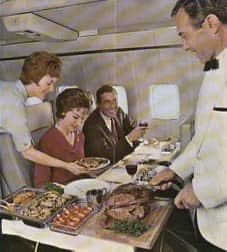
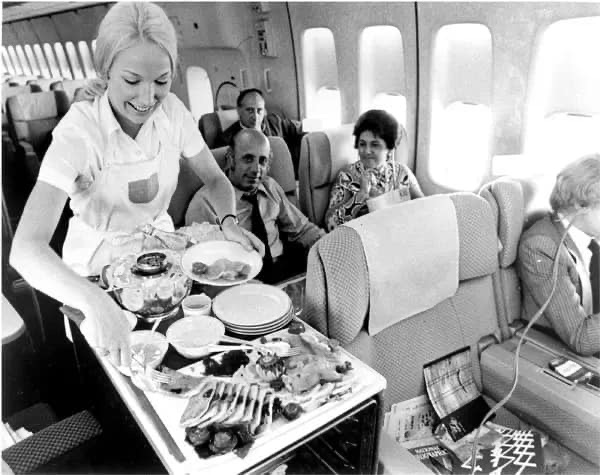
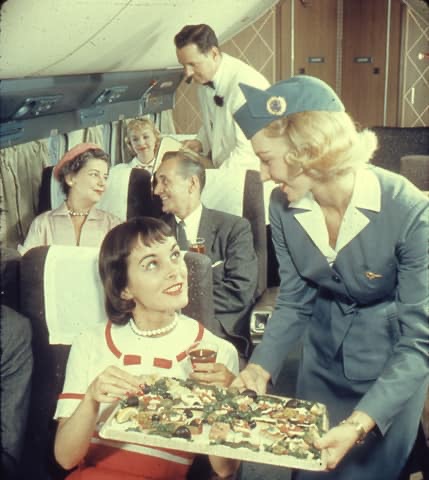
Over the years, the typical menu aboard a Pan Am flight was a reflection of luxury and international flair.
Wealthy Americans’ mid-century interest in luxury and gourmet dining (a selling point was that the famous Parisian restaurant, Maxim’s, allegedly supervised the preparation of meals) was on full display in the multi course menus that greeted first class passengers, down to the Maxim’s logo that decorated the printed menus.
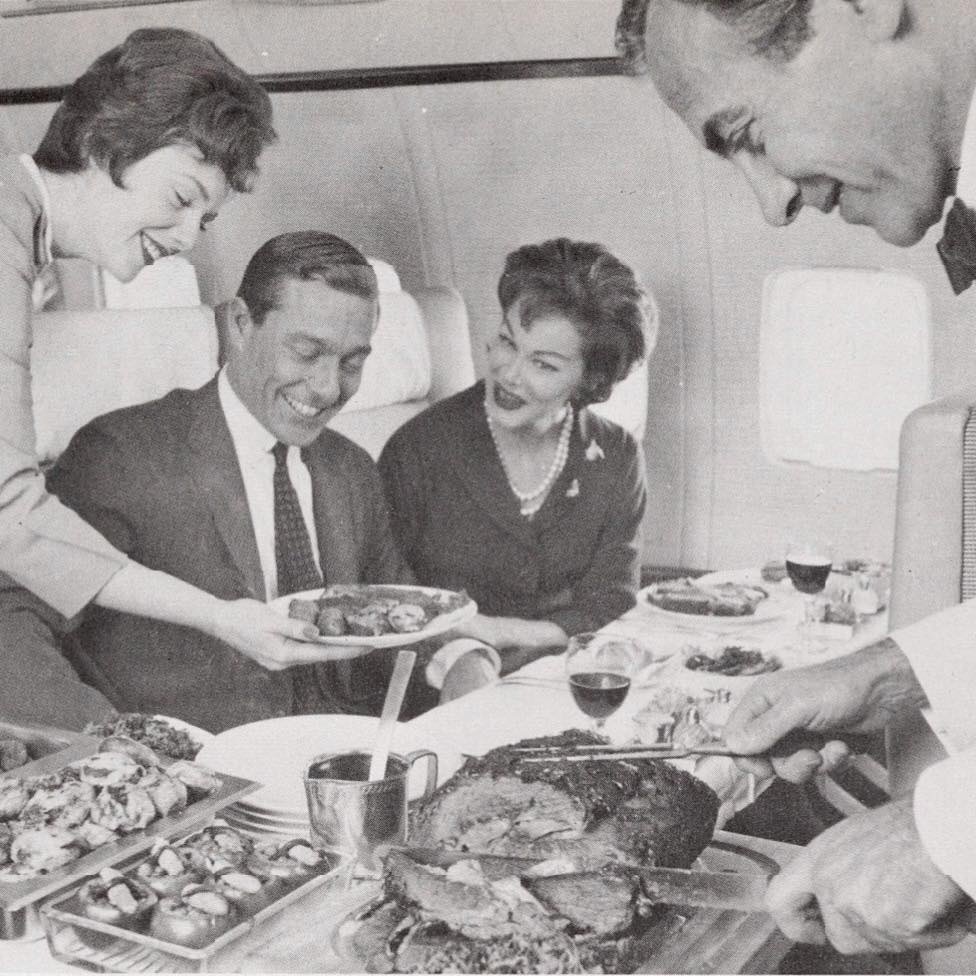
Smartly outfitted chefs and stewards carved meats aisle-side under the gaze of sophisticated passengers, but to keep consistent standards, much of the preparation needed to be centralized.
Pan Am’s solution was to develop four gigantic commissaries–in New York, San Francisco, and Tokyo, which would prepare foods, flash Y freeze them, and deliver them to airports around the world. What this meant practically was that items sourced in France, such as foie gras, might be shipped to New York for including in first-class meals, then shipped back to Paris to be loaded on a plane destined New York.
The logistics (and food miles, in these pre-environmentally-conscious days) were astounding.
In the 1950s and 1960s, passengers could expect elaborate meals with multiple courses, such as caviar, lobster, and chateaubriand, served on fine china with silver cutlery.
By the 1970s, the menus had become more diverse, incorporating dishes from around the world to cater to an increasingly international clientele.
Despite the changes and deregulation in air travel, Pan Am maintained a reputation for its gourmet cuisine until its operations ceased in 1991.
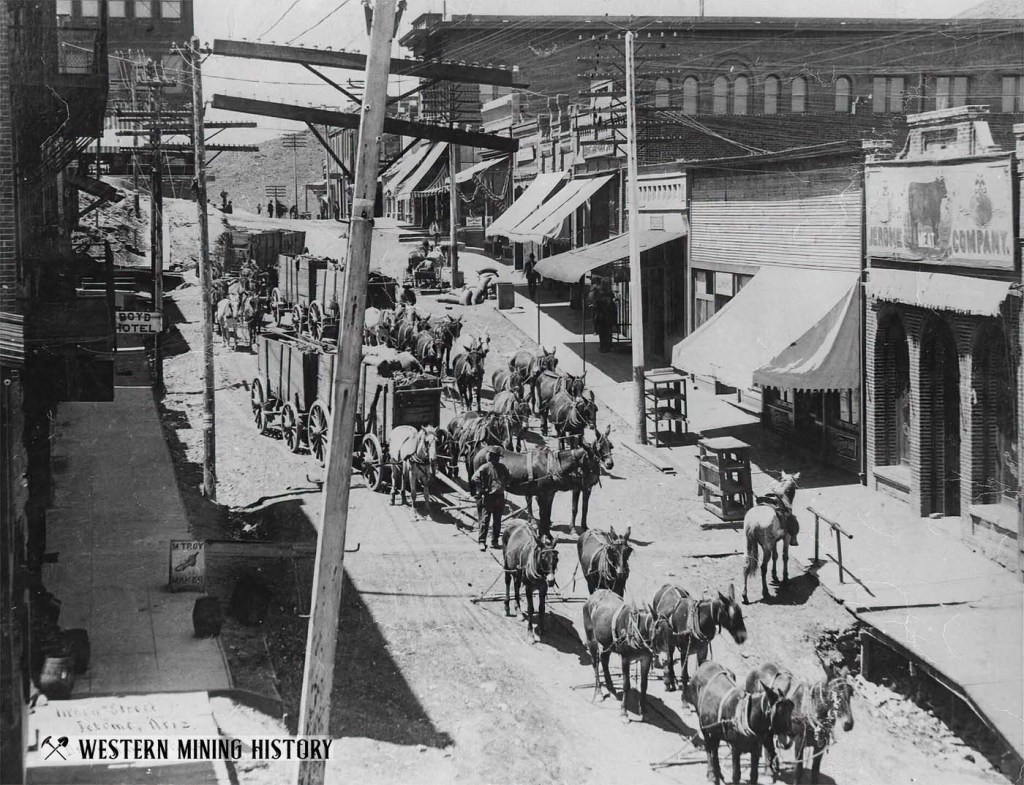
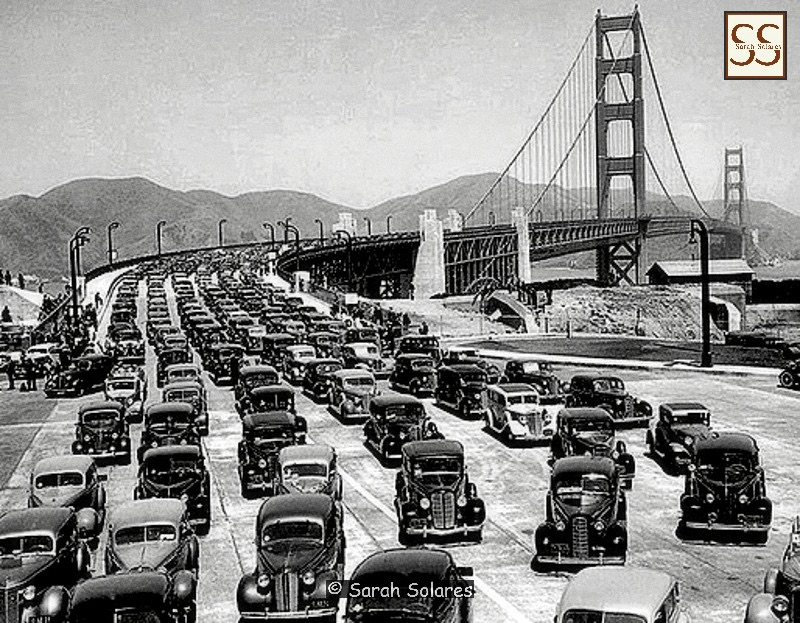
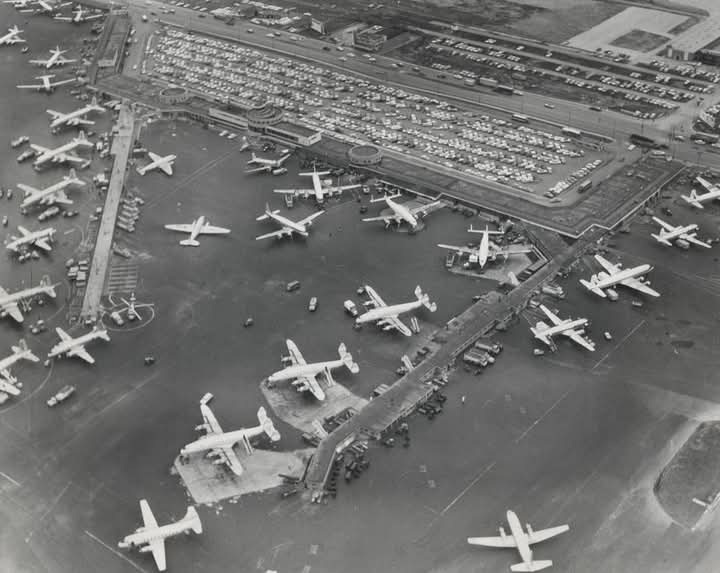
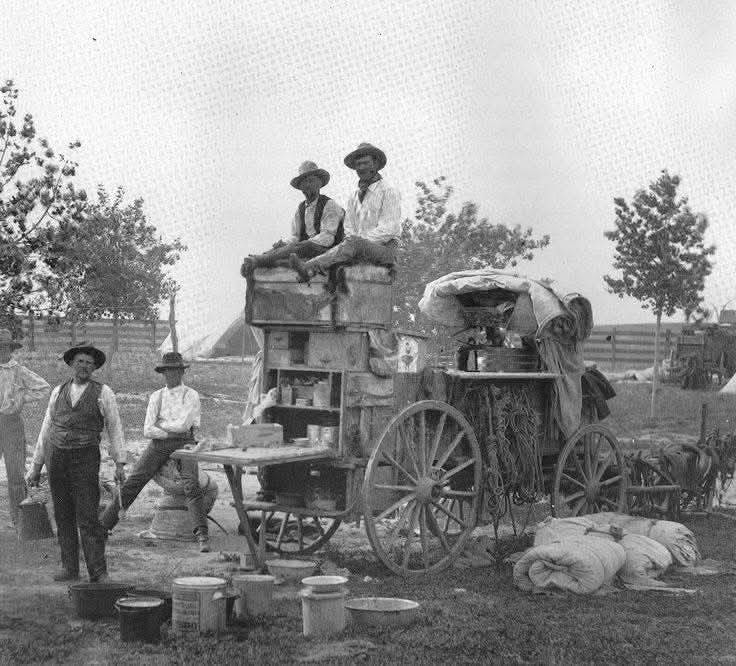
Female workers at the Kelly Springfield, Allegany Ordnance Plant manufacturing .50 BMG Ammunition in Cumberland, Maryland – 1943 This ordnance plant was operated by the Kelly Springfield Tire Company, ammunition manufactured here had a headstamp of “KS” LIFE Magazine Archives – Gordon Coster Photographer WWP-PDWoman with a General Electric mainframe computer and a blackboard , 1955.Pictured is Mesaba No. 10 as it was delivered in September of 1912. The Mesaba Railway Company operated interurbans between Hibbing and Gilbert, Minnesota, from 1912 to 1927. The streetcar’s frame is made of composite wood and steel. The body is made of yellow pine, reinforced with I-beams and steel plates. The sides and ends are plated with steel, and canvas covers the roof. As originally built, Mesaba No. 10 weighed 48,400 pounds and was 9 feet 4 inches wide, with a length of 49 feet. Photo from MSM archivesOre wagons traverse a Jerome, Arizona street ca. 1900 On May 27, 1937, the Golden Gate Bridge officially opened to traffic, marking a historic moment for San Francisco and the United States.The iconic orange-red suspension bridge connected San Francisco to Marin County, forever changing the region’s landscape and accessibility. As cars first crossed the bridge that day, it symbolized innovation, engineering marvel, and the ambitious spirit of the time. The bridge, designed by engineer Joseph Strauss, was a technological feat, as it was the longest suspension bridge in the world when it openedThe opening day saw thousands of people walking across before vehicles were allowed, creating a festive atmosphere. Since then, the Golden Gate Bridge has become a symbol of California and an architectural landmark admired worldwide. Mid 1960s: All the makings for a full-course dinner are stowed in the Pan Am Clipper’s galley before departure, methodically arranged so that the purser and stewardesses can serve a whole plane load of passengers in an hour or less. . Two huge commissaries, one at John F. Kennedy International Airport in New York City, the other in Paris, have been set up to prepare in advance the various elements of the delicious hot meals served on transatlantic flights for President Special and Rainbow Economy Services. . In Paris, the commissary is maintained by Maxim’s of Paris — world renowned for fine food. The commissary at Kennedy Airport is operated by the airline. The two operations are similar, being supervised jointly by Pan American and Maxim’s.This was the very first bridge across the Mississippi River, back when it opened in 1855 in Minneapolis.Midway Airport in 1958 when it still was the “World’s busiest airport”. In 1949, Municipal Airport was renamed Midway in honor of the hard fought Battle of Midway in the Pacific during World War II. Originally named Chicago Air Park, Midway Airport was built on a 320-acre (1.3 km2) plot in 1923 with one cinder runway that primarily served airmail services. By 1950, Midway became home to 15 scheduled airlines. 1952 saw Midway reach the 5 million passenger mark. Today, the airport serves more than 18 million passengers annually. This 1876 photograph offers a rare glimpse of Gayville, South Dakota, the earliest known image of a settlement that emerged during the Black Hills Gold Rush. Founded by brothers Alfred and William Gay, Gayville was established at the site of rich gold placers near Deadwood. The settlement’s early promise was fueled by the allure of gold, attracting miners and settlers eager to stake their claim. Gayville played an important role in the early days of the region’s mining boom, becoming a key part of the developing landscape of the Black Hills. However, despite its initial success, Gayville’s position in the region was soon overshadowed by nearby Central City, which grew more rapidly and became the primary town in the gulch by 1877. While it was eclipsed by larger towns, Gayville continued to be a viable mining community for many decades, sustaining its population and industries long after its initial burst of growth. The town’s legacy, though lesser-known compared to its neighbors, reflects the dynamic and ever-shifting nature of mining settlements during this turbulent period of American history. The photo remains a testament to the enduring spirit of the people who lived and worked in the shadow of the gold rush.Then and now inside a Boeing flight deck In the late 1800s, as cowboys embarked on long cattle drives across the American West, the chuck wagon became a lifeline. Serving as a mobile kitchen, it was essential for ensuring the crew was well-fed after grueling days of herding cattle. Invented in 1866 by Charles Goodnight, a Texas rancher, the chuck wagon revolutionized life on the trail. With its clever design, it provided not only meals but also a sense of stability and routine in the harsh and often unpredictable conditions of the frontier.. Meals prepared at the chuck wagon were simple yet hearty, featuring staples like beans, salted meat, biscuits, and coffee—foods chosen for their ability to endure long journeys and sustain the cowboys’ energy. The “cookie,” the chuck wagon cook, was far more than just a chef; they were a central figure in camp life, maintaining supplies, setting the mood with their leadership, and often serving as a trusted confidant. The chuck wagon wasn’t just a place to eat—it became a hub for connection, where cowboys swapped stories, sang songs, and built camaraderie. Cattle drives were vital to the American economy during this period, transporting vast herds of cattle from Texas to railheads in states like Kansas to supply growing markets. Without the chuck wagon, these arduous treks would have been even more challenging, as it provided not just sustenance but a morale boost that kept cowboys moving forward. The chuck wagon’s impact extended beyond its practical purpose, symbolizing the ingenuity and resilience that defined the cowboy lifestyle. Today, the chuck wagon remains an enduring emblem of the Old West, celebrated in reenactments, museums, and chuck wagon cook-offs. Its legacy speaks to the spirit of adaptability and community that helped shape a nation. As cowboys knew well: “On the toughest trails, it’s not just the journey but the company and sustenance that carry you through…. Pumping fuel in 1974 at just $0.48 a gallon—can you imagine? It’s a reminder of how much things have changed over the years, with gas prices soaring far beyond that simple price tag. Those were the days of cruising down the road with a full tank without breaking the bank!