


















 You are in the middle of a few projects at your home: putting in a new fence, painting the basement walls and putting in a new garden. You are hot and sweaty, covered in dust, lawn clippings, dirt and paint. You have your old work clothes on. You know the outfit — shorts with the hole in the crotch, old T-shirt with a stain from who-knows-what, and an old pair of tennis shoes.Right in the middle of these projects you realize you need to run to Home Depot for supplies.Depending on your age you might do the following:
In your 20s:
Stop what you are doing. Shave, take a shower, blow dry your hair, brush your teeth, floss and put on clean clothes. Check yourself in the mirror and flex. Add a dab of your favorite cologne because, you never know, you just might meet some hot chick while standing in the checkout line.And yes, you went to school with the pretty girl running the register.
In your 30s:
Stop what you are doing, put on clean shorts and shirt. Change your shoes. You married the hot chick so no need for much else.Wash your hands and comb your hair. Check yourself in the mirror. Still got it. Add a shot of your favorite cologne to cover the smell. The cute girl running the register is the kid sister to someone you went to school with.
In your 40s:
Stop what you are doing. Put on a sweatshirt that is long enough to cover the hole in the crotch of your shorts.Put on different shoes and a hat. Wash your hands. Your bottle of Brute is almost empty; so don’t waste any of it on a trip to Home Depot.Check yourself in the mirror and do more sucking in than flexing.The hot young thing running the register is your daughter’s age and you feel weird about thinking she’s spicy.
In your 50s:
Stop what you are doing. Put on a hat. Wipe the dirt off your hands onto your shirt. Change shoes because you don’t want to get dog crap in your new sports car. Check yourself in the mirror and swear not to wear that shirt anymore because it makes you look fat.The cutie running the register smiles when she sees you coming and you think you still have it. Then you remember — the hat you have on is from Bubba’s Bait & Beer Bar and it says, ‘I Got Worms ‘
In your 60s:
Stop what you are doing. No need for a hat any more. Hose the dog crap off your shoes. The mirror was shattered when you were in your 50s. You hope you have underwear on so nothing hangs out the hole in your pants.The girl running the register may be cute but you don’t have your glasses on, so you’re not sure.
In your 70s:
Stop what you are doing. Wait to go to Home Depot until the drug store has your prescriptions ready too. Don’t even notice the dog crap on your shoes.The young thing at the register stares at you and you realize your balls are hanging out the hole in your crotch.
In your 80s:
Stop what you are doing. Start again. Then stop again. Now you remember you need to go to Home Depot. Go to Wal-Mart instead. You went to school with the old lady greeter.You wander around trying to remember what you are looking for. Then you fart out loud and think someone called your name.
In your 90s & beyond:
What’s a home deep hoe? Something for my garden? Where am I? Who am I? Why am I reading this? Did I send it? Did you? Who farted?
I would like to begin this august assemblage of quotes on change with my long-held belief about change.
Change is neither good nor bad, it is inevitable.
Observe always that everything is the result of a change, and get used to thinking that there is nothing Nature loves so well as to change existing forms and to make new ones like them.
Marcus Aurelius
Change alone is eternal, perpetual, immortal.
Arthur Schopenhauer, philosopher
The art of progress is to preserve order amid change and to preserve change amid order.
Alfred North Whitehead, mathematician and philosopher
To exist is to change, to change is to mature, to mature is to go on creating oneself endlessly.
Henri Bergson, philosopher
There is nothing wrong in change, if it is in the right direction. To improve is to change, so to be perfect is to have changed often.
Winston Churchill
I wanted to change the world. But I have found that the only thing one can be sure of changing is oneself.
Aldous Huxley
To keep our faces toward change and behave like free spirits in the presence of fate is strength undefeatable.
Helen Keller
It’s not about standing still and becoming safe. If anybody wants to keep creating, they have to be about change.
Miles Davis
Change is the law of life. And those who look only to the past or the present are certain to miss the future.
John F. Kennedy
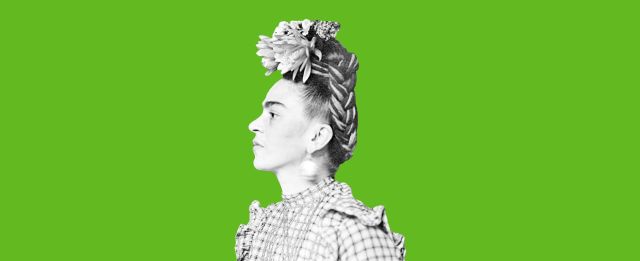
Nothing is absolute. Everything changes, everything moves, everything revolves, everything flies and goes away.
Frida Kahlo
They always say time changes things, but you actually have to change them yourself.
Andy Warhol
All that you touch you change. All that you change changes you. The only lasting truth is change.
Octavia E. Butler
Change almost never fails because it’s too early. It almost always fails because it’s too late.
Seth Godin
If you don’t like something, change it. If you can’t change it, change your attitude.
Maya Angelou
Change will not come if we wait for some other person or if we wait for some other time. We are the ones we’ve been waiting for. We are the change that we seek.
Barack Obama
Some changes look negative on the surface but you will soon realize that space is being created in your life for something new to emerge.
Eckhart Tolle
One child, one teacher, one book, and one pen can change the world.
Malala Yousafzai
Change is made of choices, and choices are made of character.
Amanda Gorman

Tesla is truly smart technology!!
I bought a new Tesla!! Had to go back to the dealer the other day because I couldn’t get the radio to work.
The service technician explained that the radio was voice-activated.”Nelson,” the technician said to the radio.
The radio replied, “Ricky or Willie?” “Willie” he continued and “On The Road Again” flowed from the speakers.
Then he said, “Ray Charles”, and in an instant “Georgia On My Mind” replaced Willie Nelson.
I drove away so happy and for the next few days every time I’d say, “Beethoven”, I’d get beautiful classical music, and if I said, “Beatles”, I’d get one of their awesome songs.
Well, yesterday, this woman ran a red light and nearly smashed into my new Tesla, but luckily, I swerved in time to avoid her.
I yelled at her, “Crazy Bitch”
The radio replied, “Hillary, Maxine, Kamala, Warren, AOC, or Pelosi?”
God, I love this car!
 When you occasionally have a really bad day, and you just need to take it out on someone, don’t take it out on someone you know, take it out on someone you don’t know, but you know deserves it.
I was sitting at my desk when I remembered a phone call I’d forgotten to make. I found the number and dialed it. A man answered, saying ‘Hello.’ I politely said, this is Chris. Could I please speak with Robyn Carter?’ Suddenly a manic voice yelled out in my ear ‘Get the right f***ing number!’ And the phone was slammed down on me.
I couldn’t believe that anyone could be so rude.
When I tracked down Robyn’s correct number to call her, I found that I had accidentally transposed the last two digits. After hanging up with her, I decided to call the ‘wrong’ number again. When the same guy answered the phone, I yelled ‘You’re an asshole!’ And hung up.
I wrote his number down with the word ‘asshole’ next to it and put it in my desk drawer.
Every couple of weeks, when I was paying bills or had a really bad day, I’d call him up and yell, ‘You’re an asshole!’ It always cheered me up.
When Caller ID was introduced, I thought my therapeutic ‘asshole’ calling would have to stop. So, I called his number and said, ‘Hi, this is John Smith from the telephone company. I’m calling to see if you’re familiar with our Caller ID Program?’ He yelled ‘NO!’ And slammed down the phone. I quickly called him back and said, ‘That’s because you’re an asshole!’ And hung up.
One day I was at the store, getting ready to pull into a parking spot. Some guy in a black BMW cut me off and pulled into the spot I had patiently waited for. I hit the horn and yelled that I’d been waiting for that spot, but the idiot ignored me. I noticed a ‘For Sale ‘ sign in his back window, so I wrote down his number.
A couple of days later, right after calling the first asshole (I had his number on speed dial), I thought that I’d better call the BMW asshole, too. I said, ‘Is this the man with the black BMW for sale?’ He said, ‘Yes, it is.’ I then asked, ‘Can you tell me where I can see it?’ He said, ‘Yes, I live at 34 Oaktree Blvd., in Fairfax It’s a yellow ranch style house and the car’s parked right out in front.’
I asked, ‘What’s your name?’ He said, ‘My name is Don Hansen.’ I asked, ‘When’s a good time to catch you, Don?’ He said, ‘I’m home every evening after five.’ I said, ‘Listen, Don, can I tell you something?’ He said, ‘Yes?’ I said, ‘Don, you’re an asshole!’ Then I hung up, and added his number to my speed dial, too.
Now, when I had a problem, I had two assholes to call. Then I came up with an idea… I called asshole #1. He said, ‘Hello’ I said, ‘You’re an asshole!’ (But I didn’t hang up.) He asked, ‘Are you still there?’ I said, ‘Yeah!’ He screamed, ‘Stop calling me’ I said, ‘Make me.’ He asked, ‘Who are you?’ I said, ‘My name is Don Hansen.’ He said, ‘Yeah? Where do you live?’ I said, ‘Asshole, I live at 34 Oaktree Blvd., in Fairfax, a yellow ranch style home and I have a black Beamer parked in front.’
He said, ‘I’m coming over right now, Don. And you had better start saying your prayers.’ I said, ‘Yeah, like I’m really scared, asshole,’ and hung up.
Then I called Asshole #2. He said, ‘Hello?’ I said, ‘Hello, asshole,’ He yelled, ‘If I ever find out who you are…’ I said, ‘You’ll what?’ He exclaimed, ‘I’ll kick your ass’ I answered, ‘Well, asshole, here’s your chance. I’m coming over right now.’
Then I hung up and immediately called the police, saying that I was on my way over to 34 Oaktree Blvd, in Fairfax, to kill my gay lover.
Then I called Channel 7 News about the gang war going down in Oaktree Blvd in Fairfax…
I quickly got into my car and headed over to Fairfax …I got there just in time to watch two assholes beating the crap out of each other in front of six cop cars, an overhead news helicopter and surrounded by a news crew.
NOW I feel much better.
Anger management really does work
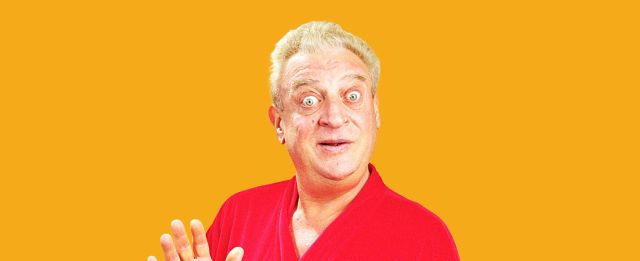
When I was a kid my parents moved a lot, but I always found them. Rodney Dangerfield
My friend asked me if I wanted a frozen banana. I said, “No, but I want a regular banana later, so … yeah.”
Mitch Hedberg
I was going to have cosmetic surgery until I noticed that the doctor’s office was full of portraits by Picasso.
Rita Rudner
I saw a bank that said “24-hour banking,” but I don’t have that much time.
Steven Wright
My father always used to say, “What doesn’t kill you, makes you stronger.” Until the accident.
Jimmy Carr
Adults are always asking kids what they want to be when they grow up because they are looking for ideas.
Paula Poundstone
A good rule to remember for life is that when it comes to plastic surgery and sushi, never be attracted by a bargain.
Graham Norton
If I had a bookstore, I would make all the mystery novels hard to find.
Demetri Martin
You can’t lose a homing pigeon. If your homing pigeon doesn’t come back, then what you’ve lost is a pigeon.
Sara Pascoe
Pie can’t compete with cake. Put candles in a cake, it’s a birthday cake. Put candles in a pie, and somebody’s drunk in the kitchen.
Jim Gaffigan
Why do dogs always race to the door when the doorbell rings? It’s almost never for them.
Norm MacDonald
I’m going to get married again because I’m more mature now, and I need some kitchen stuff.
Wendy Liebman
I hate housework. You make the beds, you do the dishes, and six months later, you have to start all over again.
Joan Rivers
My doctor told me that jogging could add years to my life. I think he was right. I feel 10 years older already.
Milton Berle
I’ve had a perfectly wonderful evening, but this wasn’t it.
Groucho Marx

The Roman emperor’s wife hates playing hide and seek because wherever she goes, Julius Caesar.
I like what mechanics wear, overall.
If you are being chased by a pack of taxidermists, do not play dead.
I tried to steal spaghetti from the shop, but the female guard saw me and I couldn’t get pasta.
My friend told me he was going to a fancy dress party as an Italian island. I said to him, “Don’t be Sicily.”
I don’t know what you call a small spillage from a pen but I have an inkling.
My grandfather invented the cold air balloon but it never really took off.
I hate funerals — I’m not a mourning person.
I used to work in a shoe-recycling shop. It was sole-destroying.
When she saw her first strands of gray hair, she thought she’d dye.
A boiled egg is hard to beat.
Once you’ve seen one shopping center, you’ve seen a mall.
It’s hard to explain puns to kleptomaniacs because they always take things literally.
I’m a big fan of whiteboards. I find them quite remarkable.
Yesterday, a clown held the door open for me. It was such a nice jester.
Becoming a vegetarian is a huge missed steak.
The other day she tried to make a chemistry joke, but got no reaction.
It’s funny — England doesn’t have a kidney bank, but has a Liverpool.
Acupuncture is a jab well done.
When a clock is hungry, it goes back four seconds.

I was within and without, simultaneously enchanted and repelled by the inexhaustible variety of life.
Let us learn to show our friendship for a man when he is alive and not after he is dead.
Life starts all over again when it gets crisp in the fall.
Can’t repeat the past? … Why of course you can!
Tomorrow we will run faster, stretch out our arms farther.
Whenever you feel like criticizing any one … just remember that all the people in this world haven’t had the advantages that you’ve had.
Personality is an unbroken series of successful gestures.
Laughter is easier minute by minute, spilled with prodigality, tipped out at a cheerful word.
Reserving judgments is a matter of infinite hope.
People disappeared, reappeared, made plans to go somewhere, and then lost each other, searched for each other, found each other a few feet away.
There are only the pursued, the pursuing, the busy and the tired.
Life is much more successfully looked at from a single window.
She wanted her life shaped now, immediately — and the decision must be made by some force — of love, of money, of unquestionable practicality — that was close at hand.
No amount of fire or freshness can challenge what a man will store up in his ghostly heart.
As I walked on I was lonely no longer. I was a guide, a pathfinder, an original settler.















 Loren Berg's Blog