














Habit is necessary; it is the habit of having habits, of turning a trail into a rut, that must be incessantly fought against if one is to remain alive.
Stuckness shouldn’t be avoided. It’s the psychic predecessor of all real understanding.
Robert M. Pirsig
I am the master of my fate: / I am the captain of my soul.
William Ernest Henley
Dreams do not come true just because you dream them. It’s hard work that makes things happen. It’s hard work that creates change.

True life is lived when tiny changes occur.
People are capable, at any time in their lives, of doing what they dream of.
We’ve always done it this way” is not a good enough reason to keep doing it if it isn’t working. When an otherwise smart habit or ritual loses its potency and you continue doing it, you’re in a rut.
Things may get a little odd at times, but they work out. You don’t have to try very hard to make them work out; you just let them.
Whatever you want to accomplish, stop overthinking it. You don’t need to have it all together. You just need to get on with it. You change your life by doing, not by thinking about doing.
Gary John Bishop
Ever tried. Ever failed. No matter. Try again. Fail again. Fail better.
Samuel Beckett
We imagine that when we are thrown out of our usual ruts all is lost, but it is only then that what is new and good begins.

Murphy, a furniture dealer from Dublin, decided to expand his store’s furniture line by traveling to Paris to find new items.
Upon arriving in Paris, he visited manufacturers and selected a line he believed would be popular in his home country. To celebrate his acquisition, he decided to treat himself to a glass of wine at a small bistro.
As he savored his wine, he noticed the bistro was quite crowded, and the only vacant seat at his table was the one across from him.
Before long, a beautiful young Parisian girl approached his table. She spoke French to him, which he couldn’t understand. He motioned to the vacant chair and invited her to sit down.
He tried speaking to her in English, but she didn’t speak his language. After a few minutes of trying to communicate, he grabbed a napkin and drew a picture of a wine glass. She nodded, so he ordered a glass of wine for her.
They sat together at the table for a while, and then he took another napkin and drew a picture of a plate with food on it. She nodded again, and they left the bistro, finding a quiet cafe with a small group playing romantic music.
They ordered dinner, and then he took another napkin and drew a picture of a couple dancing. She nodded, and they got up to dance. They danced until the cafe closed and the band packed up.
Back at their table, the young lady took a napkin and drew a picture of a four-poster bed.
To this day, Murphy has no idea how she figured out he was in the furniture business!

Stagecoach travel in the American West wasn’t just a rugged adventure—it also came with a class system that determined how much comfort (or hardship) a passenger could expect. Some stage lines offered three classes of tickets. First-class passengers remained seated for the entire journey, spared from the more strenuous demands of travel. Second-class ticket holders, however, were expected to disembark and walk during steep climbs. Third-class passengers endured the harshest experience, often walking—and even helping to push—the coach uphill.
The terrain itself could be brutal. One of the most infamous stretches was the sand dunes west of Yuma in the Arizona Territory. Coaches couldn’t make it through the soft ground, so passengers had to dismount and ride mules across the desert—earning the colorful nickname “Jackass Mail.” It was dusty, exhausting, and often dangerous, but for many, it was the only way west. These journeys tested endurance, but they also brought travelers closer to the raw, untamed heart of the frontier.
Whatever their class of ticket, passengers on coaches like the one departing Deadwood, Dakota Territory, around 1880 faced an unforgiving journey. Weather, rough roads, bandits, and fatigue were constant companions. Yet stagecoaches were a vital thread in the fabric of western expansion—linking isolated towns, delivering news and mail, and carrying hopeful pioneers toward new beginnings.


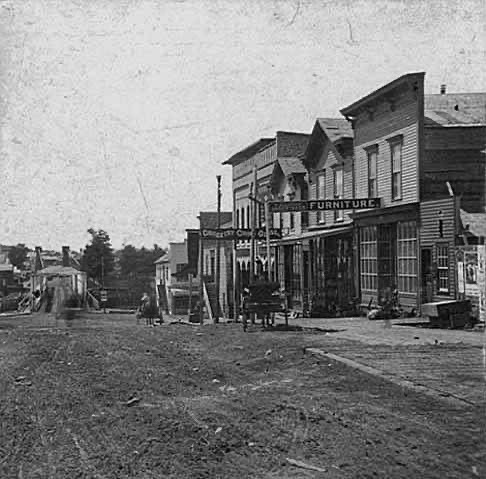
Hennepin Avenue in Minneapolis in 1872

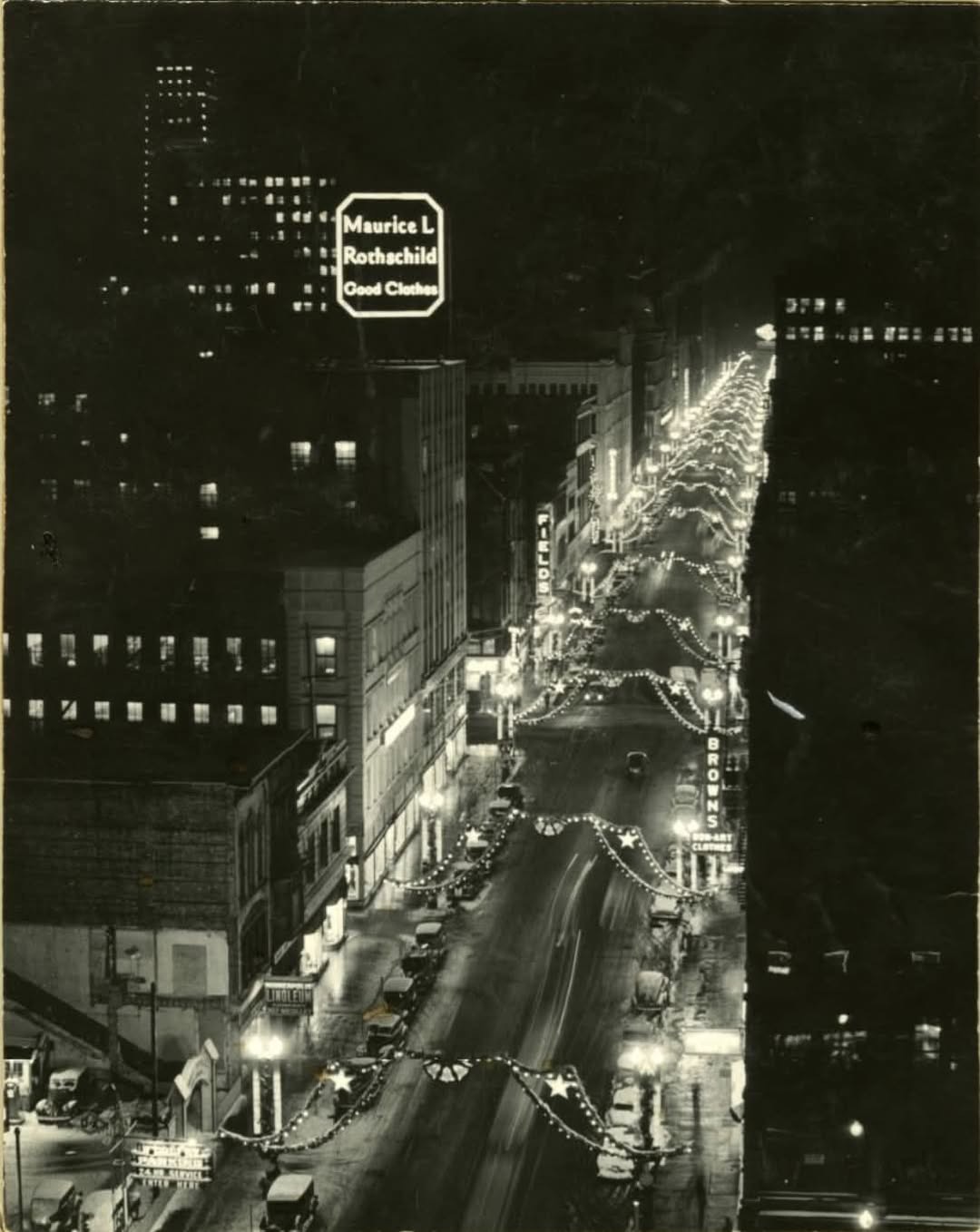
Nicollet Avenue at night at Christmas, Minneapolis, Minnesota, 1937 from Hennepin History Museum.
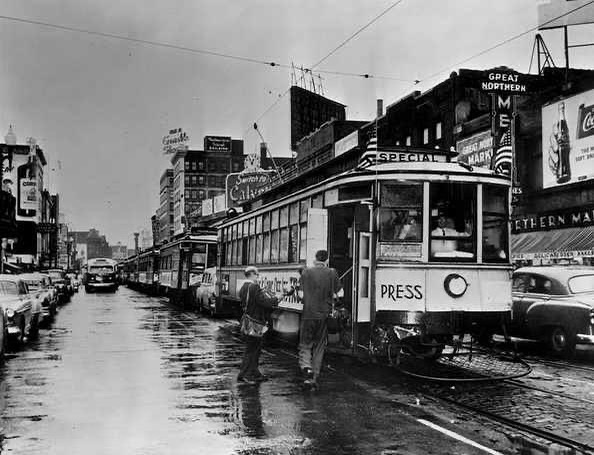
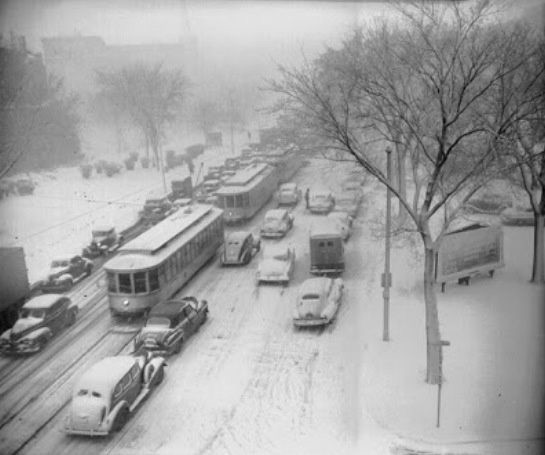
Streetcar in Minneapolis in 1954 – Photo courtesy of the Minnesota Historical Society
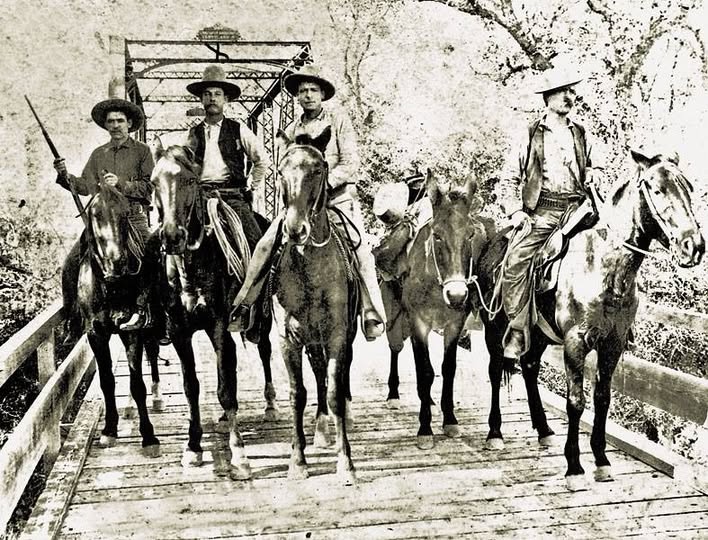
In 1892, four Texas Rangers stood still just long enough to be captured in a rare and haunting photograph—but what if this moment wasn’t as simple as it seems? You won’t believe what historians have recently uncovered about this image. Their faces are stoic, their gear rugged, their mission supposedly just—but there’s something suspicious in the way they look at the camera, as if they knew this photo would survive long after the truth was buried.
This wasn’t just another day on the frontier. At a time when the Wild West was being tamed and lawlessness was being rewritten by those with power, these four men rode into a chapter of history drenched in secrets. Who were they really protecting? And who decided what justice looked like? The deeper you look into their eyes, the more questions emerge—questions about hidden agendas, vanished enemies, and a justice system written in gunpowder and grit.
Preserved by the Institute of Texan Cultures, this mysterious image has reemerged—and not everyone’s happy about it. Why now? What secrets does it threaten to expose? Some say this photo holds the key to a truth long kept silent by dusty archives and selective memory. Scroll carefully… because once you start pulling on this thread, the entire story of the Texas Rangers might begin to unravel.
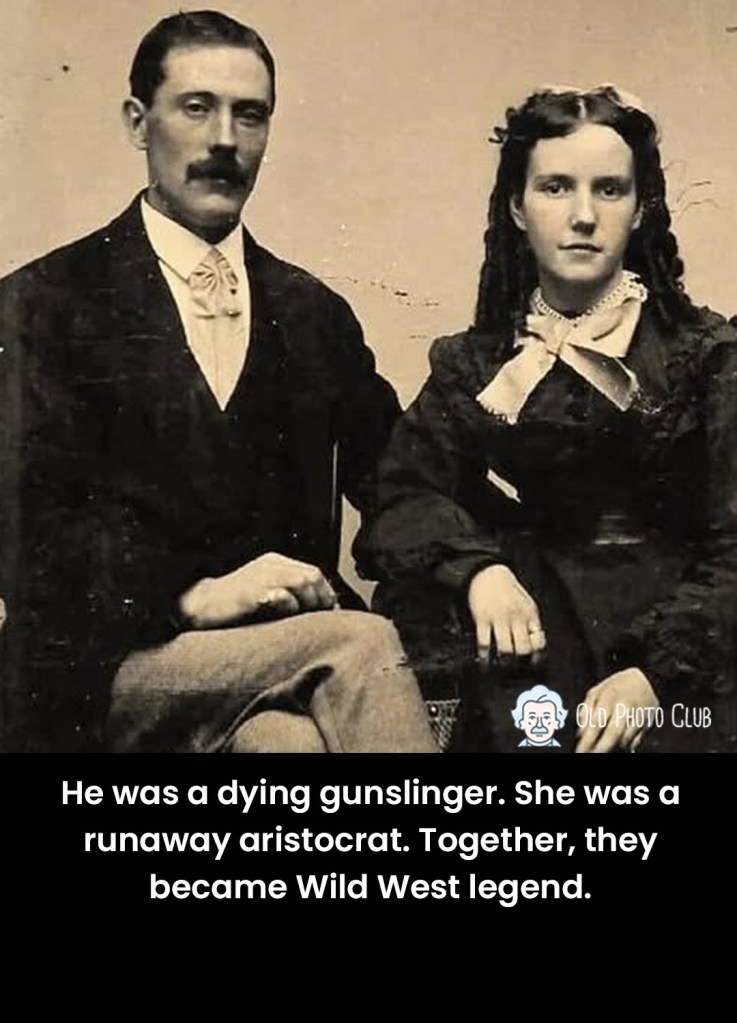
John Henry “Doc” Holliday wasn’t supposed to be a gunslinger. He was born in Georgia in 1851, trained as a dentist, and had a future full of promise. But when tuberculosis cut into his lungs in his twenties, he headed west, trading drills for pistols and playing cards. The dry air didn’t heal him—but it gave him something else: a place to run, fight, and live fast.
By the time he landed in Tombstone, Arizona, Doc had become both feared and admired. Quick with a shot and quicker with his temper, he stood by Wyatt Earp through saloons, shootouts, and the legendary Gunfight at the O.K. Corral. But the one person he trusted above all? Big Nose Kate.
Born Mary Katharine Haroney, she wasn’t just some saloon girl with a nickname. She was Hungarian by birth, fluent in several languages, educated, fierce, and independent. Their relationship burned hot—loud fights, long separations, but always a bond that pulled them back together. She once helped him escape from jail, setting fire to a building as a diversion. Not a storybook romance—but something far wilder.
They weren’t heroes. Not by any tidy legend’s standard. They were outlaws with a heart, survivors with sharp edges, holding onto each other while the West burned around them.
Doc died in a sanitarium in Colorado at 36. Kate lived decades longer, telling their story on her terms.
Together, they remain etched in legend—not for what they tamed, but for what they dared to live through.
BREAKING NEWS
Launched in 1977, space probe Voyager 1 is now officially “ONE LIGHT DAY” away from Earth = 1.609×10¹⁰ miles, or, 25.9 billion kilometers. To put this in context, we often see distances like one or more – often times many more – light years distance to other items in our universe. An example, The new study estimates the size of the Milky Way’s disk at 200,000 light-years across. Past studies have suggested the Milky Way is between 100,000 light-years and 160,000 light-years across. (One light-year is the distance light travels in a year, about 6 trillion miles or 10 trillion kilometers.)

I need to sit down.



































 Loren Berg's Blog