

The Oseberg cart, discovered in the Oseberg Ship, is the only complete Viking Age wagon ever found. The ship, dating from the mid 9th century, is considered one of the most lavish relics of a Viking burial. It was discovered in a burial mound in Oseberg, near the Oslo Fjord in Norway. The wagon is made of beech and oak and is about two meters long and one meter wide. The wagon box, which sits loosely on the chassis, is decorated with men’s heads and people fighting snakes and strange animals. This discovery provides valuable insights into the craftsmanship, culture, and lifestyle of the Vikings during that era. It’s a testament to the advanced woodworking skills and artistic sensibilities of the Viking people.
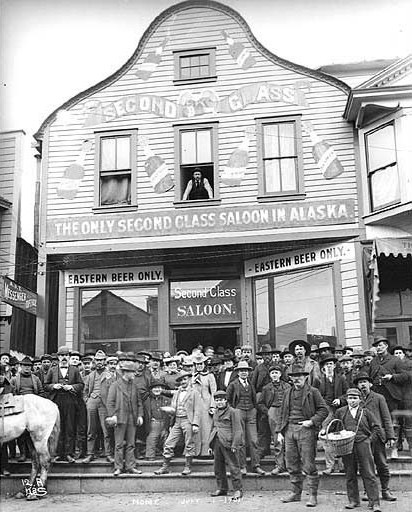
The Second Class Saloon Nome, AK. July 1st, 1901
The “Three Lucky Swedes” – Jafet Lindeberg, Erik Lindblom, and John Brynteson – who stumbled upon a lucrative gold deposit on Anvil Creek in 1898 ignited a frenzied gold rush to the area. Word of this extraordinary find swiftly traversed the Klondike gold fields during that winter, leading to the establishment of Anvil City by 1899, a settlement that proudly housed a population of 10,000.
However, the real excitement was yet to unfold. In 1899, rumors circulated about gold concealed in the beach sands, attracting the world’s attention beyond. This triggered a massive stampede, with thousands of fortune seekers going to Nome from distant ports like Seattle and San Francisco. The landscape transformed as tents sprouted across the vast expanse, stretching along the 30-mile stretch between Cape Rodney and Cape Nome. Driven by determination, Pioneers began constructing structures from finished board lumber as early as 1899.
The zenith of Nome’s bustling mining town occurred in the early 1900s, marking its ascendancy as Alaska’s largest city. While estimates suggested a population of 20,000, the official 1900 record reported an impressive figure of 12,488. Notably, one-third of all recorded white inhabitants of Alaska called Nome home, as per the U.S. Census.
Unfortunately, the grandeur of Nome’s gold rush architecture was marred by the ravages of fire and the fury of violent storms. Little remains of that captivating era today, but the surviving remnants bear traces of the ornate Victorian style that charmed many during the gold rush.
Presently, the resilient inhabitants of Nome have diversified their livelihoods, no longer dependent solely on gold panning and rocking. The legacy of the gold rush endures, albeit as a fraction of the vibrant tapestry that comprises Nome’s captivating history. Over the past century, a rich flow of people and events has shaped the contemporary community of Nome. Explore more about the historic Nome to delve deeper into its intriguing past.





 Loren Berg's Blog
I love things like these articles, so interesting !
Thanks for the history lessons!! I like them even more than the great memes!