
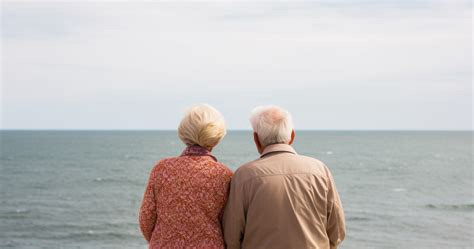
But that quiet label hides something most people rarely stop to
consider. We are the last living witnesses of a world that no longer
exists.
Look at us and you might see grey hair, slower steps, and the patience
that time teaches.
But listen to our story — really listen — and you’ll realize something
extraordinary.
We are the only generation in human history to have lived a fully
analog childhood and a fully digital adulthood.
That’s not a small thing. That’s one of the most breathtaking journeys
a human being has ever been asked to make.
We were born in the 1940s, 50s, and early 60s, into a world still
rebuilding from the rubble of World War II.
Our toys were marbles and hopscotch and card games at kitchen tables.
When the streetlights flickered on, that was it — childhood adventures
were over, and it was time to go home. No smartphones. No streaming.
No endless scroll.
We built our memories in the real world. With scraped knees and
laughter echoing down streets and friendships formed face to face.
In 1969, we sat in living rooms staring at black-and-white televisions
as Neil Armstrong took humanity’s first steps on the Moon. Hundreds of
thousands of us stood in muddy fields at Woodstock ’99 believing —
really believing — that music and community could reshape the future.
We fell in love to vinyl records spinning on turntables. We waited
days, sometimes weeks, for handwritten letters to arrive. We learned
patience because information did not come instantly. Mistakes were
fixed with erasers — not a delete button.
Then the world transformed.
Machines that once filled entire rooms shrank to devices lighter than
a paperback. We went from rotary phones and party lines to seeing the
face of someone we love on the other side of the ocean — instantly, on
something that fits in a pocket.
We watched the birth of the personal computer. The arrival of the
internet. The smartphone. Artificial intelligence.
And through every single shift — we adapted.
Not because it was easy. Because that is what our generation does.
We also carry the weight of history in our bodies.
We grew up afraid of polio and tuberculosis. We watched science defeat
them. We witnessed the discovery of the structure of DNA, the decoding
of the human genome, the transformation of medicine itself. We
survived pandemics across decades — and kept going.
Few generations have been asked to absorb so much change in a single lifetime.
And through all of it, certain things never changed.
We still know the joy of a cold glass of lemonade (or maybe a cold
beer) on a hot afternoon. The taste of vegetables picked straight from
a garden. The value of a long conversation that unfolds slowly,
without a screen interrupting it.
We have celebrated births and mourned losses. Carried the stories of
friends who are gone. Watched the world become something our younger selves couldn’t have imagined — and found ways to belong in it anyway.
We are not relics.
We are living bridges between two entirely different worlds.
Our memory carries something the modern world needs — proof that
progress doesn’t have to erase wisdom. That speed does not have to
replace patience, kindness, or reflection.
So when someone calls us elderly, we can smile.
Because behind that word is something remarkable.
We crossed two centuries. Witnessed eight decades of transformation.
Walked from handwritten letters to artificial intelligence — and never
lost our sense of what actually matters.
We are called “the elderly.”


this is one of my favorite pieces i’ve read about this – it is so true and we, as well as others, forget this at times