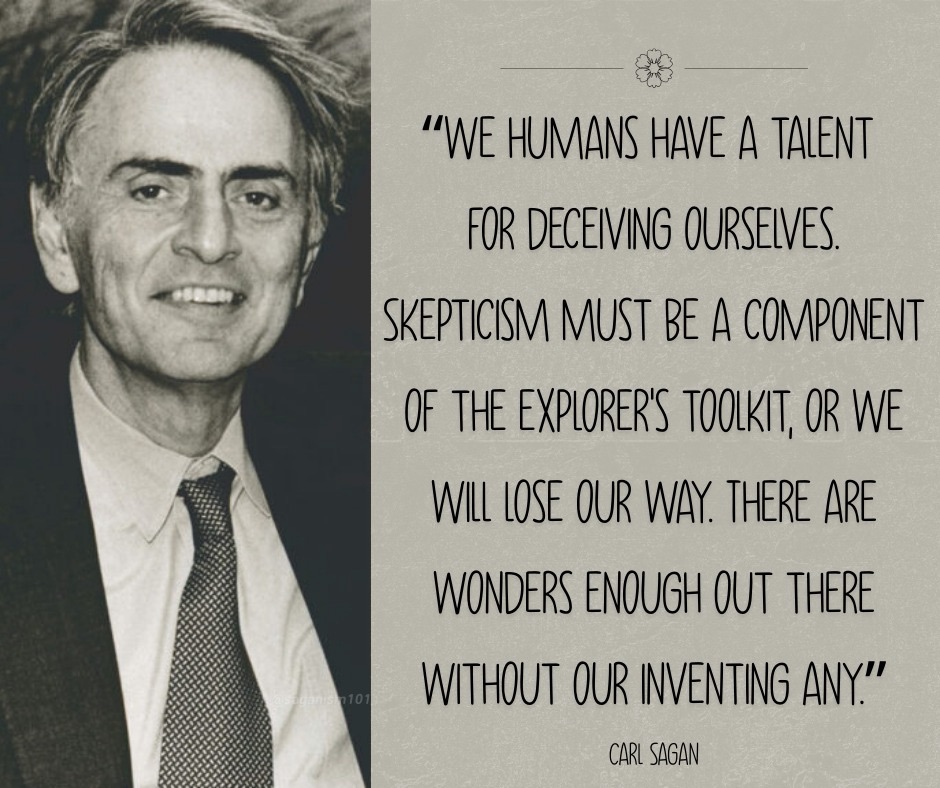
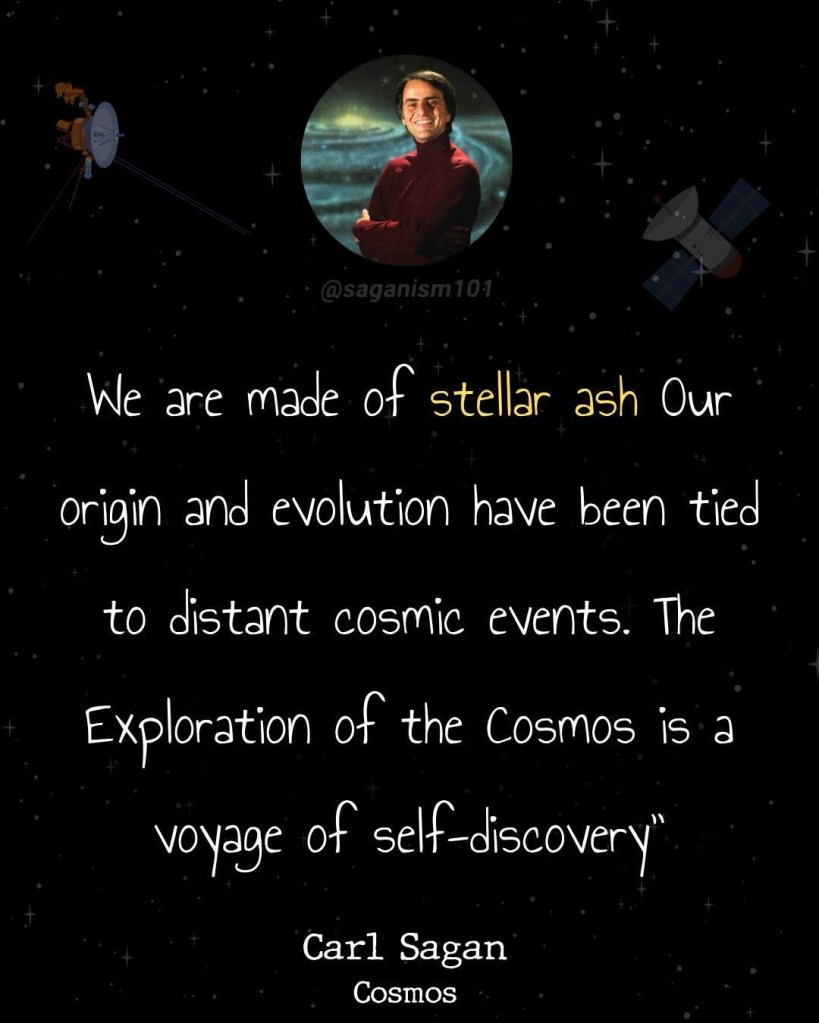
We live in a society absolutely dependent on science and technology and yet have cleverly arranged things so that almost no one understands science and technology. That’s a clear prescription for disaster. Every day there are decisions being made in Washington that will affect our future, things like information superhighways and reduction of nuclear arsenals, research on AIDS, whether drugs that ease the pain of those who are dying should be decriminalized, what is the best way to make sure that America continues as a leader in industrial technology, how to deal with the depleting ozone layer, and global warming. There’s hardly an aspect of modern society that doesn’t depend on intelligent decision making in science and technology. We are supposed to be a democracy. The people are supposed to make sure that their representatives vote correctly. How can they do that if they don’t know what the issues are and can’t understand them?” Carl Sagan “Bringing Science Down to Earth” (Hemispheres 1994)Because it is clear from the fossil record that almost every species that has ever existed is extinct; extinction is the rule, survival is the exception. -Carl Sagan, The Varieties of Scientific Experience: A Personal View of the Search for God, Ann Druyan (Editor) (2006)If a Creator God exists, would He or She or It… prefer a kind of sodden blockhead who worships while understanding nothing? Or would He prefer His votaries to admire the real universe in all its intricacy?… Science is, at least in part, informed worship. -Carl Sagan, The Varieties of Scientific Experience: A Personal View of the Search for God, Ann Druyan (Editor) (2006)My deeply held belief is that if a god of anything like the traditional sort exists, then our curiosity and intelligence are provided by such a god. We would be unappreciative of those gifts if we suppressed our passion to explore the universe and ourselves. On the other hand, if such a traditional god does not exist, then our curiosity and our intelligence are the essential tools for managing our survival in an extremely dangerous time. In either case the enterprise of knowledge is consistent surely with science; it should be with religion, and it is essential for the welfare of the human species.” Carl Sagan ; The Varieties of Scientific Experience: A Personal View of the Search for GodWe’ve arranged a global civilization in which most crucial elements – transportation, communications, and all other industries; agriculture, medicine, education, entertainment, protecting the environment; and even the key democratic institution of voting – profoundly depend on science and technology. We have also arranged things so that almost no one understands science and technology. This is a prescription for disaster. We might get away with it for a while, but sooner or later this combustible mixture of ignorance and power is going to blow up in our faces.” Carl Sagan ; The Demon-Haunted World : Science as a Candle in the DarkI am interested in the evolution of intelligence for another reason as well. We now have at our command, for the first time in human history, a powerful tool- the large radio telescope-which is capable of communication over immense interstellar distances. We are just beginning to employ it in a halting and tentative manner, but with a perceptibly increasing pace, to determine whether other civilizations on unimaginably distant and exotic worlds may be sending radio messages to us. Both the existence of those other civilizations and the nature of the messages they may be sending depend on the universality of the process of evolution of intelligence that has occurred on Earth. Conceivably, some hints or insights helpful in the quest for extraterrestrial intelligence might be derived from an investigation of the evolution of terrestrial intelligence. -Carl Sagan, The Dragons of Eden: Speculations on the Evolution of Human Intelligence (1977)“What an astonishing thing a book is. It’s a flat object made from a tree with flexible parts on which are imprinted lots of funny dark squiggles. But one glance at it and you’re inside the mind of another person, maybe somebody dead for thousands of years. Across the millennia, an author is speaking clearly and silently inside your head, directly to you. Writing is perhaps the greatest of human inventions, binding together people who never knew each other, citizens of distant epochs. Books break the shackles of time. A book is proof that humans are capable of working magic.” Carl Sagan ; Cosmos “The Persistence of Memory” 3h ·
“Towards the end of the 19th century, Jules Verne wrote a story and account in which he attempted to predict what transportation techniques would be present in about 1950. And the most you can imagine was enormous balloons with elegant gondolas and red velvet crossing the United States from New York to San Francisco in only a period of a few weeks. Jules Verne was a very daring thinker. Now his problem was he could not imagine heavier than aircraft because they had not been invented. And everyone said they could not be such a thing. What I’m saying is that the technological developments that cannot now be predicted will probably dominate the future in 100 or 200 years from now. And therefore no one is in the position to make a reliable prediction.” Carl Sagan On Jules Verne & Technological Predictions (Oasis In Space with Jacques & Philippe Cousteau, 1976) The secrets of evolution are death and time – the deaths of enormous numbers of lifeforms that were imperfectly adapted to the environment; and time for a long succession of small mutations that were by accident adaptive, time for the slow accumulation of patterns of favorable mutations. Part of the resistance to Darwin and Wallace derives from our difficulty in imagining the passage of the millennia, much less the aeons. What does seventy million years mean to beings who live only one-millionth as long? We are like butterflies who flutter for a day and think it is forever.” Carl Sagan ; Cosmos
Accidentally useful mutations provide the working material for biological evolution-as, for example, a mutation for melanin in certain moths, which changes their color from white to black. Such moths commonly rest on English birch trees, where their white coloration provides protective camouflage. Under these conditions, the melanin mutation is not an advantage-the dark moths are starkly visible and are eaten by birds; the mutation is selected against. But when the Industrial Revolution began to cover the birch bark with soot, the situation was reversed, and only moths with the melanin mutation survived. Then the mutation is selected for, and, in time, almost all the moths are dark, passing this inheritable change on to future generations. There are still occasional reverse mutations eliminating the melanin adaptation, which would be useful for the moths were English industrial pollution to be controlled. Note that in all this interaction between mutation and natural selection, no moth is making a conscious effort to adapt to a changed environment. The process is random and statistical.
-Carl Sagan, The Dragons of Eden: Speculations on the Evolution of Human Intelligence (1977)
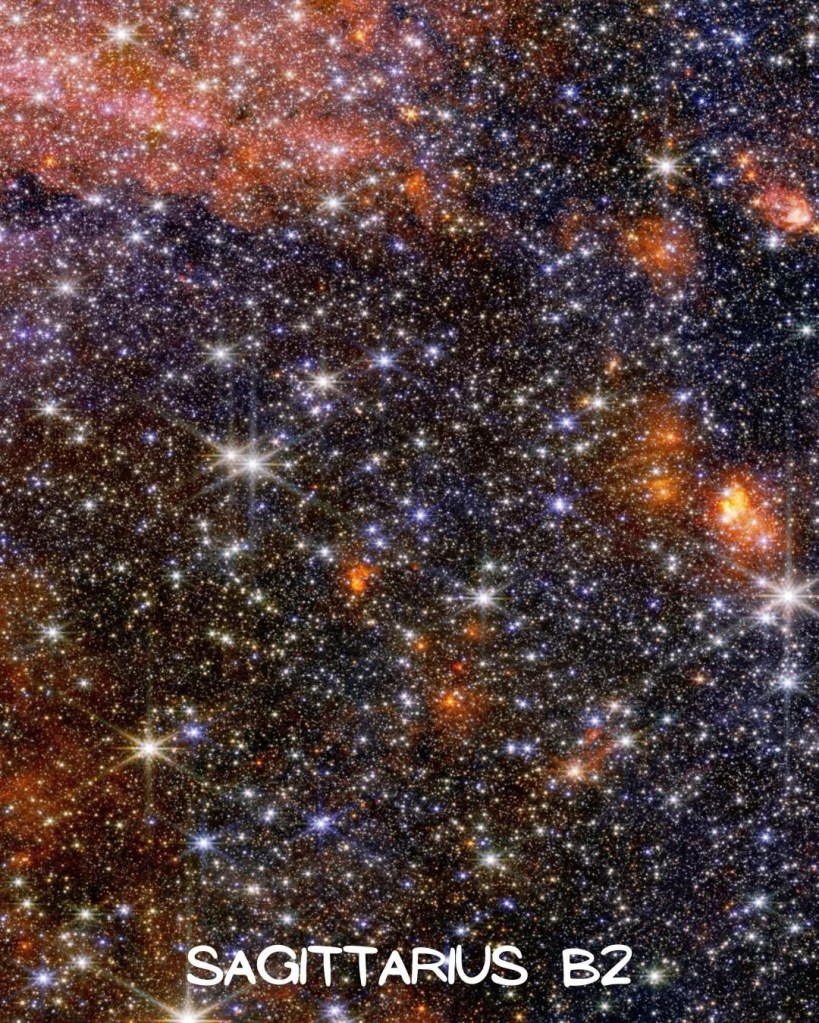
By fifty-five million years ago, in the Eocene Period, there was a great proliferation of primates, both arboreal and ground-dwelling, and the evolution of a line of descent that eventually led to Man. Some primates of those times-e. g., a prosimian called Tetonius exhibit in their endocranial casts tiny nubs where the frontal lobes will later evolve. The first fossil evidence of a brain of even vaguely human aspects dates back to eighteen million years to the Miocene Period, when an anthropoid ape which we call Proconsul or Dryo-pithecus appeared. Proconsul was quadrupedal and arboreal, probably ancestral to the present great apes and possibly to Homo sapiens as well. He is roughly what we might expect for a common ancestor of apes and men. (His approximate contemporary, Ramapithecus, is thought by some anthropologists to be ancestral to man.) Proconsul’s endocranial casts show recognizable frontal lobes but much less well developed neocortical convolutions than are displayed by apes and men today. His cranial volume was still very small. The biggest burst of evolution in cranial volume occurred in the last few million years. -Carl Sagan, The Dragons of Eden: Speculations on the Evolution of Human Intelligence (1977)Civilization develops not from Abel, but from Cain the murderer. The very word “civilization” derives from the Latin word for city. It is the leisure time, community organization and specialization of labor in the first cities that permitted the emergence of the arts and technologies we think of as the hallmarks of civilizations. The first city, according to Genesis, was constructed by Cain, the inventor of agriculture-a technology that requires a fixed abode. And it is his descendants, the sons of Lamech, who invent both “artifices in brass and iron” and musical instruments. Metallurgy and music technology and art-are in the line from Cain. And the passions that lead to murder do not abate: Lamech says, “For I have slain a man for wounding me, and a young man for bruising me; if Cain shall be avenged sevenfold, truly Lamech seventy and sevenfold.” The connection between murder and invention has been with us ever since. Both derive from agriculture and civilization. -Carl Sagan, The Dragons of Eden: Speculations on the Evolution of Human Intelligence (1977) There certainly is a kind of plausibility argument for extraterrestrial life and it goes something like like this: There’s – we now realize an enormous number of planets, in the last few years – telescopes in Earth orbit and ground based telescopes – have found a range of planetary systems around nearby stars, some in the process of formation as the solar system was four billion years ago or so, others apparently fully fully formed. So there’s a lot of potential abodes for life. That’s one thing. Then there’s the question of organic matter, the the molecules that make us up, the carbon-rich complex molecules that are essential for the kind of life we know about, are fantastically abundant. They litter the universe. We see them in asteroids, and comets, and the moons and the outer solar system, and even in the cool dark spaces between the stars. So the stuff of life is everywhere. And then there’s time. There are billions of years for biological evolution on all those worlds. There are many worlds that are much older than ours. And so you put those together – lots of places, lots of organic matter, lots of time – and it seems very hard to believe that our paltry little planet is the only one that’s inhabited.” Carl Sagan (Studs Terkel Radio Interview in 1985 for “Contact”) #carlsagan#science#extraterrestrial#intelligence Sagittarius B2 is a giant molecular cloud of gas and dust located about 390 light-years from the center of the Milky Way. The cloud contains vast amounts of complex organic molecules, including methanol, ethanol, and propanol.

 Loren Berg's Blog