Due to my time alone, I finished three books yesterday. And believe me, that is a lot of coloring.
What did our parents do to kill boredom before the internet? I asked my 26 brothers and sisters, and they did not know either.
I tried donating blood today…NEVER AGAIN! Too many stupid questions: Who’s blood, is it? Where did you get it from? Why is it in a bucket? There is nothing scarier than that split second when you lose your balance in the shower and you think, “They are going to find me naked.”
Today, I melted an ice cube with my mind just by staring at it. It took a lot longer than I thought it would.
Struggling to get your wife’s attention? Just sit down and look comfortable.
Just sold my homing pigeon on eBay for the 22nd time.
I grew up with Steve Jobs, Johnny Cash and Bob Hope. Now there is no jobs, no cash, and no hope. Please do not let anything happen to Kevin Bacon.
Shout-out to everyone who can still remember their childhood phone number but cannot remember the password they created yesterday. You are my people.
One minute you are young and fun. And next, you are turning down the stereo in your car to see better.
Think you are old and you will be old. Think you are young, and you will be delusional.
When I offer to wash your back in the shower, all you have to say is ‘yes’ or ‘no’. Not all this “Who are you and how did you get in here?” nonsense.
Not in jail, not in a mental hospital, not in a grave—I would say I am having a good day*******************
Freedom is the only worthy goal in life. It is won by disregarding things that lie beyond our control. Epictetus, philosopher
Enjoy what you can and ignore the rest. Let’s not waste any energy fighting things that are outside our control. Paulo Coelho
If you worry too much about what might be, and wonder too long about what might have been, you will ignore and completely miss what is. Marc and Angel Chernoff, authors
The only real battle in life is between hanging on and letting go. Shannon L. Alder, author
Life is to be lived, not controlled. Ralph Ellison, author
The creative process is a process of surrender, not control. Julia Cameron, author
Incredible change happens in your life when you decide to take control of what you do have power over instead of craving control over what you don’t. Steve Maraboli, author
You have power over your mind — not outside events. Realize this, and you will find strength. Marcus Aurelius, Roman emperor
Radical acceptance rests on letting go of the illusion of control and a willingness to notice and accept things as they are right now. Marsha M. Linehan, psychologist
Sometimes letting things go is an act of far greater power than defending or hanging on. Eckhart Tolle
I am very happy Because I have conquered myself And not the world. Sri Chinmoy, spiritual leader
Some people believe holding on and hanging in there are signs of great strength. However, there are times when it takes much more strength to know when to let go and then do it. Ann Landers, motivational write
Learning to live is learning to let go. Sogyal Rinpoche, Tibetan Buddhist
But that quiet label hides something most people rarely stop to consider. We are the last living witnesses of a world that no longer exists.
Look at us and you might see grey hair, slower steps, and the patience that time teaches.
But listen to our story — really listen — and you’ll realize something extraordinary.
We are the only generation in human history to have lived a fully analog childhood and a fully digital adulthood.
That’s not a small thing. That’s one of the most breathtaking journeys a human being has ever been asked to make.
We were born in the 1940s, 50s, and early 60s, into a world still rebuilding from the rubble of World War II.
Our toys were marbles and hopscotch and card games at kitchen tables. When the streetlights flickered on, that was it — childhood adventures were over, and it was time to go home. No smartphones. No streaming. No endless scroll.
We built our memories in the real world. With scraped knees and laughter echoing down streets and friendships formed face to face.
In 1969, we sat in living rooms staring at black-and-white televisions as Neil Armstrong took humanity’s first steps on the Moon. Hundreds of thousands of us stood in muddy fields at Woodstock ’99 believing — really believing — that music and community could reshape the future.
We fell in love to vinyl records spinning on turntables. We waited days, sometimes weeks, for handwritten letters to arrive. We learned patience because information did not come instantly. Mistakes were fixed with erasers — not a delete button.
Then the world transformed.
Machines that once filled entire rooms shrank to devices lighter than a paperback. We went from rotary phones and party lines to seeing the face of someone we love on the other side of the ocean — instantly, on something that fits in a pocket.
We watched the birth of the personal computer. The arrival of the internet. The smartphone. Artificial intelligence.
And through every single shift — we adapted.
Not because it was easy. Because that is what our generation does.
We also carry the weight of history in our bodies.
We grew up afraid of polio and tuberculosis. We watched science defeat them. We witnessed the discovery of the structure of DNA, the decoding of the human genome, the transformation of medicine itself. We survived pandemics across decades — and kept going.
Few generations have been asked to absorb so much change in a single lifetime.
And through all of it, certain things never changed.
We still know the joy of a cold glass of lemonade (or maybe a cold beer) on a hot afternoon. The taste of vegetables picked straight from a garden. The value of a long conversation that unfolds slowly, without a screen interrupting it.
We have celebrated births and mourned losses. Carried the stories of friends who are gone. Watched the world become something our younger selves couldn’t have imagined — and found ways to belong in it anyway. We are not relics.
We are living bridges between two entirely different worlds.
Our memory carries something the modern world needs — proof that progress doesn’t have to erase wisdom. That speed does not have to replace patience, kindness, or reflection.
So when someone calls us elderly, we can smile.
Because behind that word is something remarkable.
We crossed two centuries. Witnessed eight decades of transformation. Walked from handwritten letters to artificial intelligence — and never lost our sense of what actually matters.
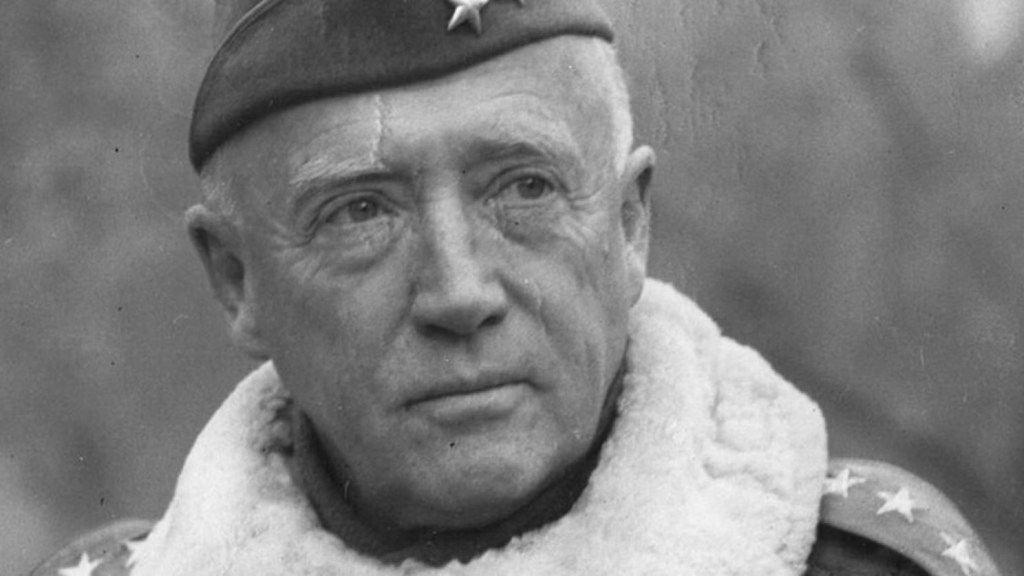
Gen. George S. Patton was a complicated military figure, but there can be little debate over whether he was quotable.
Perhaps most famous for his commanding of the 7th Army during World War II, Old “Blood and Guts” often gave rousing speeches to motivate, inspire and educate his soldiers. We collected 11 of his most famous quotes (courtesy of his estate’s official website) that show how larger than life he really was.
1. ‘A Pint of Sweat Will Save a Gallon of Blood’
Soldiers are not good on the battlefield without training hard beforehand. Whether it’s a soldier, a civilian wanting to run a marathon or a CEO running a company, being successful at what you do requires focus, effort and learning.
For soldiers especially, working extra hard in training can save their lives later.
2. ‘A Good Plan, Violently Executed Now, Is Better Than a Perfect Plan Next Week’
Known for his brilliance on the battlefield, Patton often had to make decisions based on limited information and time. But he knew to avoid “paralysis by analysis,” make a decision, and execute it the best he could. Otherwise, the enemy might maneuver faster and beat him.
3. ‘Lead Me, Follow Me, or Get Out of My Way’
Perhaps one of the most famous quotes that people don’t realize originated with Patton, this mantra summed up his style.
4. ‘Do Everything You Ask of Those You Command’
Patton led his soldiers by example. While he’s best known for commanding troops during World War II and perfecting the art of tank warfare, his troops knew he was more than willing to personally get into the fight. During World War I, for example, Patton was shot in the leg while directing tanks, after he repeatedly exposed himself to enemy fire.
5. ‘Say What You Mean, and Mean What You Say’
Patton didn’t mince words. Shortly after the Japanese bombed Pearl Harbor on Dec. 7, 1941, he began giving his now-famous “blood and guts” speeches at Fort Benning, Georgia. They were often profane, but direct.
“This individual heroic stuff is pure horse shit,” he told troops June 5, 1944, before D-Day. “The bilious bastards who write that kind of stuff for the Saturday Evening Post don’t know any more about real fighting under fire than they know about f–king!”
6. ‘Many Soldiers Are Led to Faulty Ideas of War by Knowing Too Much About Too Little’
The general didn’t sugarcoat what combat would be like for his soldiers. While movies and books tend to glorify war, Patton gave speeches to his men in which he explained exactly what they faced:
“You are not all going to die. Only 2% of you right here today would die in a major battle. Death must not be feared. Death, in time, comes to all men. Yes, every man is scared in his first battle. If he says he’s not, he’s a liar. Some men are cowards, but they fight the same as the brave men, or they get the hell slammed out of them, watching men fight who are just as scared as they are. The real hero is the man who fights even though he is scared.”
7. ‘Never Tell People How to Do Things. Tell Them What to Do, and They Will Surprise You With Their Ingenuity’
People hate to be micromanaged. A good leader, as Patton knew, tells his or her subordinates what is expected or what the overall goal is. They don’t need to give a step-by-step explanation. It’s a waste of a leader’s time, and worse, most people resent it.
8. ‘If Everybody Is Thinking Alike, Then Somebody Isn’t Thinking’
Good leaders don’t want to hear from “yes men.” They encourage healthy debate, talking over strategy, and planning out different options. Patton may have been a brilliant tactician on the battlefield, but he was also human. If one of his subordinates noticed something wasn’t working or had a better idea, according to this quote, he’d be interested to hear what it was.
9. ‘Do More Than Is Required of You’
The bare minimum amount of work didn’t cut it for Patton. “An Army is a team. It lives, sleeps, eats and fights as a team. This individual heroic stuff is pure horse sh–,” he said.
He wanted his men to think about what more they could do for the greater good of the unit, instead of only thinking about themselves. This quote can certainly apply to organizations outside the military.
10. ‘Moral Courage Is the Most Valuable and Usually the Most Absent Characteristic in Men’
Good leaders encourage their subordinates to always act with integrity, even when it’s not the most popular thing to do. Moral courage is all about doing the right thing, even if that decision may result in adverse consequences. Patton understood the value in this, along with the reason why most people didn’t have it.
11. ‘I Am a Soldier, I Fight Where I Am Told, and I Win Where I Fight.’
Having served the U.S. Army for 36 years, Patton was a career soldier who served as an example for his troops. He believed in his country, his mission and winning the battles he was tasked with. He also knew very well how to motivate his troops to fight with him:
“We’re not going to just shoot the sons of bitches. We’re going to rip out their living goddamned guts and use them to grease the treads of our tanks.”
I was in the six-item express lane at the store quietly fuming.Completely ignoring the sign, the woman ahead of me had slipped into the check-out line pushing a cart piled high with groceries.
Imagine my delight when the cashier beckoned the woman to come forward looked into the cart and asked sweetly, “So which six items would you like to buy?” (Wouldn’t it be great if that really happened)
———————————————————— Because they had no reservations at a busy restaurant, my elderly neighbor and his wife were told there would be a 45 minute wait for a table.
Young man, we are both 90 years old,” the husband said. “We may not have 45 minutes.”They were seated immediately. —————————————————— The reason Politicians try so hard to get re-elected is that they would “hate” to have to make a living under the laws they have just passed. —————————————————— All eyes were on the radiant bride as her father escorted her down the aisle. They reached the altar and the waiting groom. The bride kissed her father and placed something in his hand. The guests in the front pews responded with ripples of laughter. Even the priest smiled broadly. As her father gave her away in marriage, the bride gave him back his credit card. —————————————————— Women and cats will do as they please, and men and dogs should relax and get used to the idea. —————————————————— Three friends from the local congregation were asked, “When you’re in your casket, and friends and congregation members are mourning over you, what would you like them to say?”
Artie said, “I would like them to say I was a wonderful husband, a fine spiritual leader, and a great family man.”
Eugene commented, “I would like them to say I was a wonderful teacher and servant of God who made a huge difference in people’s lives.”
Al said, “I’d like them to say, ‘Look, he’s moving!'” ———————————————————— Smith climbs to the top of Mt. Sinai to get close enough to talk to God.Looking up, he asks the Lord. “God, what does a million years mean to you?”The Lord replies, “A minute. “Smith asks, “And what does a million dollars mean to you?”The Lord replies, “A penny.”Smith asks, “Can I have a penny?”The Lord replies, “In a minute.” —————————————– John was on his deathbed and gasped pitifully, “Give me one last request, dear,” he said. “Of course, John,” his wife said softly.
“Six months after I die,” John said, “I want you to marry Bob.”
“But I thought you hated Bob,” she said..
With his last breath John said, “I do!”
————————————– A man goes to see the Rabbi. “Rabbi, something terrible is happening and Ihave to talk to you about it.”The Rabbi asked, “What’s wrong?”
The man replied, “My wife is going to poison me.”The Rabbi, very surprised by this, asks, “How can that be?”The man then pleads, “I’m telling you, I’m certain she’s going to poison me.What should I do?”The Rabbi then offers, “Tell you what. Let me talk to her, I’ll see what I can find out and I’ll let you know.”
A week later the Rabbi calls the man.He says, “I spoke to your wife on the phone for three hours. You want my advice?”The man said, “Yes” and the Rabbi replied, “Take the poison.”