My New MacBook Air

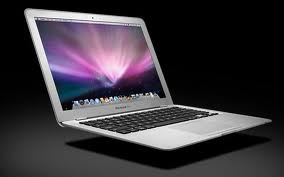
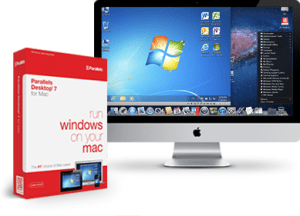
It has been about a week and one-half since I acquired by new 13″ MacBook Air but let me back-up a bit.  My 13″ MacBook met an ignominies end when I dumped a cup of coffee on the keyboard and track-pad.  Given that the MacBook was over 2 years old and the cost of repair was close to the replacement cost the decision was easy – acquire a new computer.

As is generally the case, there were options.  I could opt for the current 13″ MacBook Pro, other MacBook configurations or explore the MacBook Air offerings.  Given the way I use this computer, I quickly settled on either the 13″ MacBook Pro or the 13″ MacBook Air.  I must admit that the 11″ MacBook Air was tempting – lighter – but in the end the larger display won out.  So what were the pluses and minuses between the two 13″ options? The MacBook Air lacks an internal optical drive which I only use for loading new software and even that is becoming less of an issue as more and more of new software is downloaded rather than arriving on a CD. The $79.00 option for an external optical drive,provides all that I need.   Additionally, watching movies on a computer has never been one of my uses. There are fewer ports on the MacBook Air, but with 2 USB ports and the new Thunderbolt port, which offers two channels with speeds at 10 Gbps each, I decided the MacBook Air’s ports were sufficient. The new iteration of the MacBook Air added the back-lit keyboard that was the standard on the MacBook Pro.  At the end of the day two things sealed the deal for the MacBook Air – one the weight at just under 3 pounds, about 2 pounds less than the MacBook Pro, and second the Solid State Drive (SSD) instead of the traditional hard drive.  The SSD is so much faster it is hard to believe.  As is my want; I opted for the fastest processor, an i7 quad core, and a larger SSD, 256 Gig vs. the 128 Gig.

To date, I have no doubt that I made the right decision.  The MacBook Air comes up almost as fast as my iPad and as always the Apple keyboard is a delight.  As I noted in an earlier post with the MacBook Air, an iPad and iPhone my next desk computer will more than likely be a Mac.  This from someone that has been a PC person for almost 30 years.

25% Increase In Medicare Advantage Premium

I sure am glad that glad that President Obama’s health care initiative has reduced health care costs.  Yesterday we received our renewal information from Humana for our Medicare Advantage plan for 2012 and found that the monthly premium for each of us will increase from $139.00 per month to $174.00 per month!  A smooth 25% increase!  This is, of course, in addition to our Medicare Part B premiums.  As we spend part of the year in different states, traditional HMO/PPO offerings will not work for us – they are specific to a geographical area and you cannot have two plans in the same year.  There are offerings from other carriers, but when I investigated those last year I found that our providers did not accept the coverage.  Talk about the classic no-win situation.

After 2 years with no COLA increase in Social Security Benefits, it appears that any small COLA increase in 2012 will be eaten up by an increase in the Part B premium.  I find it amusing and more than a little disingenuous that when calculating the cost of living food and energy are excluded.  Think about it, are those not the two largest components of our variable costs?  There is do doubt that something has to be done with Social Security – I refuse to call Social Security an entitlement given that for many of us rather than an entitlement it is a bad investment – you can see my further amplification on this in a previous post here. However, it needs to be done in the context of an overall revamp of our tax and other programs, not by a continuing elimination of COLA increases.

So once again this year I will make a journey through the mirad of options and more than likely end up where I started – with a 25% increase in our health care insurance costs.

Corporations Do Not Pay Taxes and Banks to Not Absorb the Cost of Bad Debt!

We need to understand that Corporations Do Not Pay Taxes – They collect taxes.  Think about it – for a corporation taxes are like any other cost and are reflected in the cost of their product or service.  In addition there is the substantial cost of understanding and complying with the current totally unintelligible tax code.  Just think of the amount of time we as individuals invest in tax compliance and expand that to a large corporation with all of those moving parts.  So when we hear that our elected representatives are contemplating raising corporate taxes it is in essence an increase in our cost of living as the corporations have to raise the cost of whatever they sell to recoup this additional cost.

In the same vein, when someone does not pay their credit card bill, the bank does not take that loss.  The banks fees and interest charges are set so that the bank can take the loss and maintain profitability.  And where do they get the dollars to absorb those losses – You guessed it from those of us that pay our bills on time.  Think about it – if someone does not pay their balance they also do not pay any fees or interest.

So when you see or hear about corporate taxes or bank credit card losses keep these comments in mind.

Google

Once again our government is attacking a company for being successful.  Google is on the hot seat at a Senate hearing and being questioned by among others Al Franken.  The charge appears to be that Google is unfairly listing it’s offerings ahead of competing products and services.  Google does between 65% and 75% of all searches and 97% of all mobile searches.  I wonder why that is?  By jove, I bet it is because we find Google searches to be more beneficial than those form competing offerings.  Senator Franken suggested that maybe changes to Google’s search algorithms should be reviewed by some government agency.  Eric Schmidt, Googles CEO, said that Google makes something over 500 changes to the search parameters annually and waiting for government approval would be a serious setback to customer service and usefulness.  But in addition to that,  I wonder why Google should be required to reveal it’s trade secrets.

Let’s look at what Google does wrong.  They provide the service at no cost to us users.  As noted above we appear to find Google searches more beneficial.  Is Google a monopoly – not in the classic sense of the word but from a practical standpoint probably, not because they did anything illegal but because they created a new class of tools and do it better than anyone else.  Having said that, where is the consumer harm? In my mind there is no harm.  Further, I do not think that Google should be held responsible for the success of the others in the search arena.

Reducing Losses At The Postoffice?

There has been a lot said lately about the losses piling up at the Post Office. Charges and counter-charges are flying back and forth from the varying factions with the Postmaster requesting a waiver on the $5 Billion due for employee retirements to the postal worker’s union blaming congress for the huge losses.  I have often said that I can prove both sides of an argument using the same numbers and the ongoing divergent arguments on this issue prove the point.  The key is that you do not use all of the numbers in the opposing arguments.

We could spend an enormous amount of time arguing which set of numbers is right but there is no doubt that mail volume has declined and that the Post Office is losing money. Having said that, there is one move that could have a substantial impact on economics at the Post Office – the elimination of daily residential mail delivery.  Why do we need six-day a week residential delivery? Why would residential mail being delivered two or three times a week not be sufficient?  I have four years experience with once a week delivery of our mail for five months each year.  During our summer stay in Minnesota we utilize Premium Forwarding Service from the U S Post Office.  This is a fee based service where our mail is accumulated in Arizona from Thursday through the following Wednesday and sent on to Minnesota in a Priority Mail Package.  That’s right – we exist very well with once a week delivery of our mail.  The only downside to this as opposed to regular forwarding is that we still get all of the junk mail.  The positive is that our periodicals are forwarded for more than 60 days.

I do not know the exact level of the impact of moving from six-day residential delivery to two or three-day delivery would have but it is hard to argue that it would not be substantial. Mail delivery is a labor intensive operation – every time you perform the service it requires the same level of labor input – so reducing the frequency from six times per week to two or three times per week should, and hopefully would, have a commensurate reduction in the overall cost of delivering residential mail.

Would there be any negative impacts?  Probably, with the reduction in the number of people required to provide the service there would be an impact on those no longer required but that has played out in other industries over the years as productivity has improved.  Given history it is hard to argue that we will not see a continuing decline in the volume of First Class Mail, so the longer we delay dealing with the issue the greater the losses.  Obviously this is not the only solution but it is one that would have little or no impact on the general public.

iPad vs. Other Tablets?

The proliforation of tablet offerings begs the question; What would it take for one of us to choose one of these alternatives over the iPad?  For me to choose anything other than the iPad there would have to be a demonstrable improvement on the iPad interface and availability of useful apps. A difference of $100 or even $200 will not do it.  Amazon’s entry into the market will undoubtedly expand the market as it will have the availability of apps and brings the tablet to the market that is more price sensitive.  As I noted in an earlier post, when I switched from an Android phone the the iPhone I found an order of magnitude difference in the ease of use.  I suspect, but have not tested it, that the competing tablet offerings running Android will face a similar hurdle.

Is a tablet a replacement for a full computer – be it a laptop or desktop?  For someone that does heavy word processing, spreadsheets or presentations the answer is no.  However for the average person that uses a computer to surf the web and handle email the tablet is a replacement for a notebook computer.  It brings all of the functionality they need in a compact, and more importantly, easier to use format.  Think of the difference in purchasing a new computer and it’s setup and purchasing an iPad and doing the same!

So, it should be fun to watch.  Post your thoughts on this topic and lets see if we can get a conversation going.

Evernote And Other Useful Computer Items

I don’t know if you have discovered Evernote but if you haven’t you really ought to give it a look. This service allows you to store documents and access them from virtually any device. I access items stored in Evernote from; a Windows PC, a  MacBook, my iPad and my iPhone. Evernote is also available for Android phones. Evernote allows you to set up categories, they called him tags, and store any kind of document online. Evernote places an icon in the Outlook task bar and with one click you can send an e-mail to any of the categories you have in Evernote. There is also a add-on for virtually all of web browsers called Web Clipper which allows you to clip all or part of a webpage and send it directly to your Evernote database.

I basically do not keep paper. Printed items that I receive are scanned and saved on my computers and if the item relates to one of the categories in Evernote they also are stored in Evernote. My primary reason is not necessarily to save paper but so that when I go to meetings I don’t have to carry stacks of files or huge notebooks. I can take my iPad and have access to all of the stored items.  As an aside, there is an app for the iPad called LogMein that allows you to access your computer from any place that has an Internet connection. Another way to avoid carrying lots of files or other junk. Even when carrying all of those items you undoubtedly never seem to have what you need but between Evernote and LogMein you pretty much solve that problem.  By the way, LogMein is also available for the iPhone and Android devices.

The good news is that the a basic Evernote package is free and allows you to store up to 60 MB per month; documents, videos, pictures, music or whatever.. If you would like to store more data each month there is a fee based subscription for $5.00 month or $45.00 for the year which gives you up to 1 GB each month. You can that get more information about Evernote on their website at http://www.evernote.com.

I have been using the latest iteration of Google’s Chrome web browser and it has become my default browser. It is clean and fast and a pleasure to use. This from someone who has been a Firefox fan for quite some time. So if you haven’t given the new Google Chrome a try it’s probably worth your while. By the way Evernote’s web clipper is available for Chrome.

In an earlier post I talked about Dragons Naturally Speaking and am using it today to create this blog post. I continue to be amazed at the accuracy of this version, particularly given my experience with earlier generations of Naturally Speaking. So if you would like to give your carpal tunnel a rest you may want to give this well designed program a try.

And The Rain Continues

The monsoon of 2011 continues.  Lake levels are at historic highs with little short term chance that they will recede.  Terms typically heard around river communities, like sandbagging, are becoming commonplace here in the Alexandria area.  Of the roughly 250 lakes in Douglas County, some 200 drain through the Chain of Lakes and ultimately through Lake Carlos on the way to the Long Prairie River.  Here on the Southeast corner of Lake Carlos, at the Blake complex, we have renamed our tennis court Lake Blake.  As the new header for my blog shows the tennis court and surrounding area are inundated.  Given that the water covering the court is basically at the water table until Lake Carlos goes down we will be “blessed” with an underwater tennis court.  So while the southwest looks at cracks in the ground and prays for rain we look for a couple of weeks of dry weather.

The Wonderful Game Of Golf

This week I am playing in the 90th Annual Resorters Invitational Golf Tournament here in Alexandria Minnesota and it got me to thinking about how others throughout history have characterized this game that I and many love. Following are a few quotes from notables that I think put a frame around the picture that is golf.

Winston Churchill said about golf; “Golf is a game whose aim is to hit a very small ball into an even smaller hole, with weapons singularly  ill-defined for the purpose”

Arnold Palmer said; “Golf is deceptively simple and endlessly complicated; it satisfies the soul and frustrates the intellect. It is at the same time rewarding and maddening and it is without a doubt the greatest game mankind has ever invented .”

Mark Twain said when talking about golf; “A good walk spoiled” (his definition of golf). on another occasion he said “It’s good sportsmanship not to pick up lost balls while they are still rolling.”

Will Rogers must’ve been watching a recent opponent what he said; “Golf is a wonderful exercise.  You can stand on your feet for hours, watching somebody else putt. ”

From  former President Dwight D Eisenhower; “How has retirement if affected my golf game? A lot more people beat me now .”

Some days I think that Winston Churchill’s quote on Russia applies to my game; “Russia is a riddle wrapped in a mystery inside an enigma.”  Or maybe that is my golf swing?

When we think of golf we are generally talking about courses and their length and layout but maybe the best definition comes to us from Bobby Jones; “Competitive golf is played mainly on a 5-and-a-half-inch course … the space between our ears.” By the way, that is also where the wind blows the hardest.

Ben Crenshaw followed up on Bobby Jones, “I am about 5 inches from being an outstanding golfer.  That’s the distance  my left ear is from my right.”

Two more from Mark Twain, they have nothing to do with golf but I like them; “It is best to read a weather forecast before we pray for rain.” and “My body is my own, at least I have always so regarded it. If I do harm … it is I who suffers not the state”

And in closing; “If profanity had an influence on the flight of the ball, the game of golf would be played far better than it is.” Horace G Hutchinson

Who Should Pay For Public Services?

Today in the Minneapolis Star Tribune, Steve Elkin opined that; Those services where labor productivity is inelastic tend to migrate to the public sector. Also in the article he stated; Earlier this year, a freshman member of the Minnesota Legislature was heard to remark: “When will our transit system ever become profitable?” The answer to this question is, of course, “never” — at least as long as transit vehicles require operators. Why? Because public transportation suffers from “Baumol’s Cost Disease.” You can see more about this “Disease” in the article at http://www.startribune.com/opinion/otherviews/126430633.html.

Later in the article he said; It took one driver to operate a 40-passenger bus back when public transportation was profitable in, say, 1930, and it still requires one driver
to operate a 40-passenger bus today. From the perspective of labor productivity
alone, bus drivers are no more productive today than they were 80 years ago.

What Mr. Elkin did not say is that when Public Transportation was profitable those
that used the service “Paid What It Cost” to run the system and today those that use Public Transportation do not pay what it costs and depend on those that do not use Public Transportation to subsidize their usage.   So, in my opinion, when Mr. Elkin says that; Those services where labor productivity is inelastic tend to migrate to the public sector, what it really means is that when those that use a service are unwilling or unable to pay the cost of the service it migrates to the public sector.  Another way to define the Public Transportation issue is; the reason that it is less expensive to utilize public transportation than to drive your car is that those that elected to drive their car are subsidizing your public transportation ride.  If you want to see a transportation system that is efficient and paid for by those that use it, go to Disney World.  Some would argue that there is no fee, and per se they are right, however the cost of that transportation is built into the access fees, hotel rates and the like and belive me you pay for it.

I have no problem with those that use a service paying the cost of providing the service.  An example is the National Parks.  There the usage fees should, and may well, cover the cost of providing the access – not the entire cost of maintaining the facility.  Some will defend this subsidization of services as the “Public Good”, whatever that means.  I suspect that the Public in Public Good refers to those that benefit not the Public in general.  To the extent that we can transition to a better balance of those that utilize services paying the cost of the service the more quickly we can get a handle on many of our government’s, federal, state and local, costs and the ultimate tax bill.