Day Brightener – Here’s Another Trick of Doctor Dementia To Test Your Skills

brainCan you meet this challenge?

We’ve seen this with the letters out of order, but this is the first time we’ve seen it with numbers.  Good example of a Brain Study: If you can read this OUT LOUD you have a strong mind.  And better than that: Alzheimer’s is a long long, way down the road before it ever gets anywhere near you.

7H15                    M3554G3

53RV35          7O      PR0V3

H0W         0UR      M1ND5      C4N

D0         4M4Z1NG       7H1NG5!

1MPR3551V3            7H1NG5!

1N        7H3       B3G1NN1NG

17        WA5      H4RD      BU7

N0W,       0N    7H15       LIN3

Y0UR         M1ND      1S

R34D1NG 17         4U70M471C4LLY

W17H0U7            3V3N

7H1NK1NG      4B0U7     17,

B3      PROUD!        0NLY

C3R741N          P30PL3     C4N

R3AD           7H15!

PL3453         F0RW4RD     1F

U      C4N      R34D      7H15.

To my ‘selected’ strange-minded friends: If you can read the following paragraph, forward it on to your friends with ‘yes’ in the subject line. Only great minds can read this. This is weird, but interesting!

If you can raed this, you have a sgtrane mnid, too.

Can you raed this? Olny 55 people out of 100 can.

I cdnuolt blveiee that I cluod aulaclty uesdnatnrd what I was rdanieg.  The phaonmneal pweor of the hmuan mnid, aoccdrnig to a rscheearch at Cmabrigde Uinervtisy, it dseno’t mtaetr in what oerdr the ltteres in a word are, the olny iproamtnt tihng is that the frsit and last ltteer be in the rghit pclae.  The rset can be a taotl mses and you can still raed it whotuit a pboerlm.  This is bcuseae the huamn mnid deos not raed ervey lteter by istlef, but the word as a wlohe.  Azanmig huh?  Yaeh and I awlyas tghuhot slpeling was ipmorantt!  If you can raed this forwrad it.

FORWARD ONLY IF YOU CAN READ IT..

Day Brightener – 25 Words That Are Their Own Opposites

Here’s an ambiguous sentence for you: “Because of the agency’s oversight, the corporation’s behavior was sanctioned.” Does that mean, “Because the agency oversaw the company’s behavior, they imposed a penalty for some transgression,” or does it mean, “Because the agency was inattentive, they overlooked the misbehavior and gave it their approval by default”? We’ve stumbled into the looking-glass world of contronyms—words that are their own antonyms.

1. Sanction (via French, from Latin sanctio(n-), from sancire‘ratify,’) can mean “give official permission or approval for (an action)” or conversely, “impose a penalty on.”

2. Oversight is the noun form of two verbs with contrary meanings, “oversee” and “overlook.” Oversee, from Old English ofersēon (“look at from above”) means “supervise” (medieval Latin for the same thing: super-, “over” plus videre, “to see.”) Overlook usually means the opposite: “to fail to see or observe; to pass over without noticing; to disregard, ignore.”

3. Left can mean either remaining or departed. If the gentlemen have withdrawn to the drawing room for after-dinner cigars, who’s left? (The gentlemen have left and the ladies are left.)

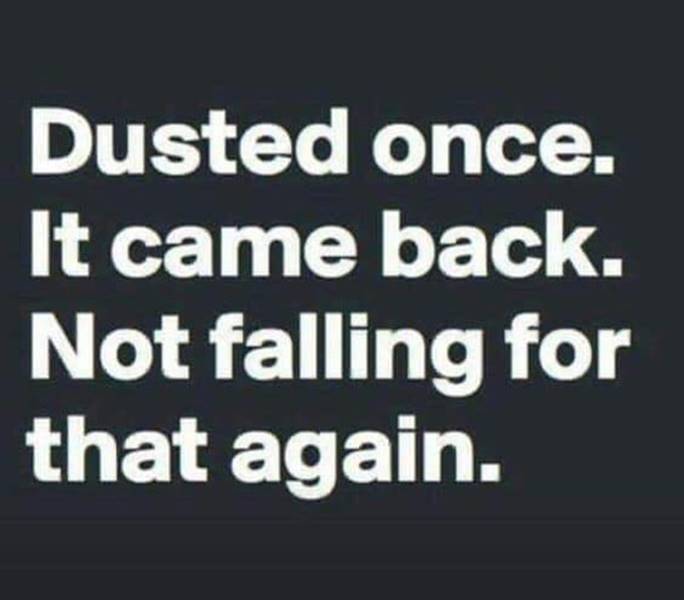
4. Dust, along with the next two words, is a noun turned into a verb meaning either to add or to remove the thing in question. Only the context will tell you which it is. When you dust are you applying dust or removing it? It depends whether you’re dusting the crops or the furniture.

5. Seed can also go either way. If you seed the lawn you add seeds, but if you seed a tomato you remove them.

6. Stone is another verb to use with caution. You can stone some peaches, but please don’t stone your neighbor (even if he says he likes to get stoned).

7. Trim as a verb predates the noun, but it can also mean either adding or taking away. Arising from an Old English word meaning “to make firm or strong; to settle, arrange,” trim came to mean “to prepare, make ready.” Depending on who or what was being readied, it could mean either of two contradictory things: “to decorate something with ribbons, laces, or the like to give it a finished appearance” or “to cut off the outgrowths or irregularities of.” And the context doesn’t always make it clear. If you’re trimming the tree are you using tinsel or a chain saw?

8. Cleave can be cleaved into two homographs, words with different origins that end up spelled the same. Cleave, meaning “to cling to or adhere,” comes from an Old English word that took the forms cleofian, clifian, or clīfan. Cleave, with the contrary meaning “to split or sever (something)”—as you might do with a cleaver—comes from a different Old English word, clēofan. The past participle has taken various forms: cloven, which survives in the phrase “cloven hoof,” “cleft,” as in a “cleft palate” or “cleaved.”

9. Resign works as a contronym in writing. This time we have homographs, but not homophones. Resign, meaning “to quit,” is spelled the same as resign, meaning “to sign up again,” but it’s pronounced differently.

10. Fast can mean “moving rapidly,” as in running fast, or “fixed, unmoving,” as in holding fast. If colors are fast they will not run. The meaning “firm, steadfast” came first; the adverb took on the sense “strongly, vigorously,” which evolved into “quickly,” a meaning that spread to the adjective.

11. Off means “deactivated,” as in to turn off, but also “activated,” as in the alarm went off.

12. Weather can mean “to withstand or come safely through” (as in the company weathered the recession) or it can mean “to be worn away” (the rock was weathered).

13. Screen can mean to show (a movie) or to hide (an unsightly view).

14. Help means “assist,” unless you can’t help doing something, when it means “prevent.”

15. Clip can mean “to bind together” or “to separate.” You clip sheets of paper to together or separate part of a page by clipping something out. Clip is a pair of homographs, words with different origins spelled the same. Old English clyppan, which means “to clasp with the arms, embrace, hug,” led to our current meaning, “to hold together with a clasp.” The other clip, “to cut or snip (a part) away,” is from Old Norse klippa, which may come from the sound of a shears.

16. Continue usually means to persist in doing something, but as a legal term it means stop a proceeding temporarily.

17. Fight with can be interpreted three ways. “He fought with his mother-in-law” could mean “They argued,” “They served together in the war,” or “He used the old battle-ax as a weapon.” (Thanks to linguistics professor Robert Hertz for this idea.)

18. Flog, meaning “to punish by caning or whipping,” shows up in school slang of the 17th century, but now it can have the contrary meaning, “to promote persistently,” as in “flogging a new book.” Perhaps that meaning arose from the sense “to urge (a horse, etc.) forward by whipping,” which grew out of the earliest meaning.

19. Go means “to proceed,” but also “give out or fail,” i.e., “This car could really go until it started to go.”

20. Hold up can mean “to support” or “to hinder”: “What a friend! When I’m struggling to get on my feet, he’s always there to hold me up.”

21. Out can mean “visible” or “invisible.” For example, “It’s a good thing the full moon was out when the lights went out.”

22. Out of means “outside” or “inside”: “I hardly get out of the house because I work out of my home.”

23. B**ch can derisively refer to a woman who is considered overly aggressive or domineering, or it can refer to someone passive or submissive.

24. Peer is a person of equal status (as in a jury of one’s peers), but some peers are more equal than others, like the members of the peerage, the British or Irish nobility.

25. Toss out could be either “to suggest” or “to discard”: “I decided to toss out the idea.”

The contronym (also spelled “contranym”) goes by many names, including auto-antonym, antagonym, enantiodrome, self-antonym, antilogy and Janus word (from the Roman god of beginnings and endings, often depicted with two faces looking in opposite directions). Can’t get enough of them? The folks at Daily Writing Tips have rounded up even more.

Day Brightener – You Gotta Love The Irish

Paddy was driving down the street in a sweat because he had an important meeting and couldn’t find a parking place.   Looking up to heaven he said, “Lord take pity on me.   If you find me a parking place, I will go to Mass every Sunday for the rest of me life and give up me Irish Whiskey!”

Miraculously, a parking place appeared.

Paddy looked up again and said, “Never mind, I found one.”

Father Murphy walks into a pub in Donegal, and asks the first man he meets, “Do you want to go to heaven?”

The man said, “I do, Father.”

The priest said, “Then stand over there against the wall.”

Then the priest asked the second man, “Do you want to go to heaven?”

“Certainly, Father,” the man replied.

“Then stand over there against the wall,” said the priest.

Then Father Murphy walked up to O’Toole and asked, “Do you want to go to heaven?”

O’Toole said, “No, I don’t Father.”

The priest said, “I don’t believe this.   You mean to tell me that when you die you don’t want to go to heaven?”

O’Toole said, “Oh, when I die, yes.   I thought you were getting a group together to go right now.”

Paddy was in New York.

He was patiently waiting and watching the traffic cop on a busy street crossing.   The cop stopped the flow of traffic and shouted, “Okay, pedestrians.”   Then he’d allow the traffic to pass

He’d done this several times, and Paddy still stood on the sidewalk.

After the cop had shouted, “Pedestrians!” for the tenth time, Paddy went over to him and said, “Is it not about time ye let the Catholics across?”

Gallagher opened the morning newspaper and was dumbfounded to read in the obituary column that he had died.   He quickly phoned his best friend, Finney.

“Did you see the paper?” asked Gallagher. “They say I died!!”

“Yes, I saw it!” replied Finney.   “Where are ye callin’ from?”

An Irish priest is driving down to  New York and gets stopped for speeding in Connecticut.  The state trooper smells alcohol on the priest’s breath and then sees an empty wine bottle on the floor of the car.

He says, “Sir, have you been drinking?”

“Just water,” says the priest.

The trooper says, “Then why do I smell wine?”

The priest looks at the bottle and says, “Good Lord! He’s done it again!”

Walking into the bar, Mike said to Charlie the bartender, “Pour me a stiff one – just had another fight with the little woman.”

“Oh yeah?” said Charlie, “And how did this one end?”

“When it was over,” Mike replied, “She came to me on her hands and knees.”

“Really,” said Charles, “Now that’s a switch!   What did she say?”

She said, “Come out from under the bed, you little chicken.”

Patton staggered home very late after another evening with his drinking buddy, Paddy.   He took off his shoes to avoid waking his wife, Kathleen.

He tiptoed as quietly as he could toward the stairs leading to their upstairs bedroom but misjudged the bottom step.  As he caught himself by grabbing the banister, his body swung around, and he landed heavily on his rump.  A whiskey bottle in each back pocket broke and made the landing especially painful.

Managing not to yell, Patton sprung up, pulled down his pants, and looked in the hall mirror to see that his butt cheeks were cut and bleeding.  He managed to quietly find a full box of Band-Aids and began putting a Band-Aid as best he could on each place, he saw blood.

He then hid the now almost empty Band-Aid box and shuffled and stumbled his way to bed.

In the morning, Patton woke up with searing pain in both his head and butt and Kathleen staring at him from across the room.

She said, “You were drunk again last night, weren’t you?”

Patton said, “Why you say such a mean thing?”

“Well,” Kathleen said, “it could be the open front door, it could be the broken glass at the bottom of the stairs, it could be the drops of blood trailing through the house, it could be your bloodshot eyes, but mostly….it’s all those Band-Aids stuck on the hall mirror.

Friday Frivolity – Ten Questions And Exceptional Answers

WHY
Why do men’s clothes have buttons on the right while women’s clothes have buttons on the left?

BECAUSE
When buttons were invented, they were very expensive and worn primarily by the rich. Since most people are right-handed, it is easier to push buttons on the right through holes on the left. Because wealthy women were dressed by maids, dressmakers put the buttons on the maid’s right! And that’s where women’s buttons have remained since.

WHY
Why do ships and aircraft use ‘mayday’ as their call for help?

BECAUSE
This comes from the French word m’aidez -meaning ‘help me’ — and is pronounced, approximately, ‘mayday.’

WHY
Why are zero scores in tennis called ‘love’?

BECAUSE
In France , where tennis became popular, the round zero on the scoreboard looked like an egg and was called ‘l’oeuf,’ which is French for ‘the egg.’ When tennis was introduced in the US , Americans (mis)pronounced it ‘love.’

WHY
Why do X’s at the end of a letter signify kisses?

BECAUSE
In the Middle Ages, when many people were unable to read or write, documents were often signed using an X. Kissing the X represented an oath to fulfill obligations specified in the document. The X and the kiss eventually became synonymous.

WHY
Why is shifting responsibility to someone else called ‘passing the buck’?

BECAUSE
In card games, it was once customary to pass an item, called a buck, from player to player to indicate whose turn it was to deal. If a player did not wish to assume the responsibility of dealing, he would ‘pass the buck’ to the next player.

WHY
Why do people clink their glasses before drinking a toast?

BECAUSE
It used to be common for someone to try to kill an enemy by offering him a poisoned drink. To prove to a guest that a drink was safe, it became customary for a guest to pour a small amount of his drink into the glass of the host. Both men would drink it simultaneously. When a guest trusted his host, he would only touch or clink the host’s glass with his own.
WHY
Why are people in the public eye said to be ‘in the limelight’?

BECAUSE
Invented in 1825, limelight was used in lighthouses and theaters by burning a cylinder of lime which produced a brilliant light In the theatre, a performer ‘in the limelight’ was the center of attention.

WHY
Why is someone who is feeling great ‘on cloud nine’?

BECAUSE
Types of clouds are numbered according to the altitudes they attain, with nine being the highest cloud. If someone is said to be on cloud nine, that person is floating well above worldly cares.

WHY
In golf, where did the term ‘Caddie’ come from?

BECAUSE
When Mary Queen of Scots went to France as a young girl, Louis, King of France, learned that she loved the Scots game ‘golf.’ He had the first course outside of Scotland built for her enjoyment. To make sure she was properly chaperoned (and guarded) while she played, Louis hired cadets from a military school to accompany her. Mary liked this a lot and when returned to Scotland (not a very good idea in the long run), she took the practice with her. In French, the word cadet is pronounced ‘ca-day’ and the Scots changed it into ‘caddie.’

WHY
Why are many coin collection jar banks shaped like pigs?

BECAUSE
Long ago, dishes and cookware in Europe were made of a dense orange clay called ‘pygg’. When people saved coins in jars made of this clay, the jars became known as ‘pygg banks.’ When an English potter misunderstood the word, he made a container that resembled a pig. And it caught on.

Day Brightener – Interesting Observations And Questions

questionsSpread the Smiles

Only in   America…….do drugstores make the sick walk all the way to the back of the store to get their prescriptions while healthy people can buy cigarettes at the front.
________________________________

Only in   America……do people order double cheeseburgers, large fries, and a diet coke.
_______________________________

Only in America…..do banks leave vault doors open and then chain the pens to the counters.
________________________________

Only in   America…..do we leave cars worth thousands of dollars in the driveway and put our useless junk in the garage.
________________________________

Only in   America…….do we buy hot dogs in packages of ten and buns in packages of eight.
________________________________

Only in   America……do they have drive-up ATM machines with Braille lettering.
________________________________

EVER WONDER ….

Why the sun lightens our hair, but darkens our skin
________________________________

Why can’t women put on mascara with their mouth closed?________________________________

Why don’t you ever see the headline ‘Psychic Wins Lottery’?________________________________

Why is ‘abbreviated’ such a long word?
________________________________

Why is it that doctors call what they do ‘practice’
________________________________

Why is lemon juice made with artificial flavor, and dishwashing liquid made with real lemons?
________________________________

Why is the man who invests all your money called a broker?________________________________

Why is the time of day with the slowest traffic called rush hour?________________________________

Why isn’t there mouse-flavored cat food?
________________________________

Why didn’t Noah swat those two mosquitoes?
________________________________

Why do they sterilize the needle for lethal injections
________________________________

You know that indestructible black box that is used on airplanes? Why don’t they make the whole plane out of that stuff?!
________________________________

Why don’t sheep shrink when it rains?
_______________________________

Why are they called apartments when they are all stuck together?________________________________

I like this one!!!

If con is the opposite of pro, is Congress the opposite of progress?________________________________

If flying is so safe, why do they call the airport the terminal?________________________________

Day Brightener – Two Ladies

Two informally dressed ladies happened to start up a conversation during an endless wait in the LAX airport. The first lady was an arrogant California woman married to a wealthy man.

The second was a well-mannered elderly woman from the South.

When the conversation centered on whether they had any children, the California woman started by saying, “When my first child was born, my husband built a beautiful mansion for me.”

The lady from the South commented, “Well, bless your heart.”

The first woman continued, “When my second child was born, my husband bought me a beautiful Mercedes-Benz.”

Again, the lady from the South commented, “Well, bless your heart.”

The first woman continued boasting, “Then, when my third child was born, my husband bought me this exquisite diamond bracelet.”

Yet again, the Southern lady commented, “Well, bless your heart.”

The first woman then asked her companion, “What did your husband buy for you when you had your first child?”

“My husband sent me to charm school,” declared the Southern lady.

“Charm school?” the first woman cried, “Oh, my God! What on earth for?”

The Southern lady responded, “Well, for example, instead of saying, ‘Who gives a shit? ’ I learned to say, ‘Well, bless your heart.’”